
When someone wishes you well, replying with “you as well” is a polite and natural response. However, using the same phrase every time can sound repetitive, especially in professional communication, business emails, or everyday conversations. Learning other ways to say “you as well” helps you sound more confident, friendly, and natural while matching the tone of the situation.
Whether you’re responding to a coworker, friend, client, or family member, choosing the right words can make your conversation feel more genuine. In this guide, you’ll discover professional alternatives, casual alternatives, and polite responses, along with practical examples that show when to use “you as well,” how it compares with “you too” and “same to you,” and the best phrases instead of “you as well” for different situations.
Quick Answer
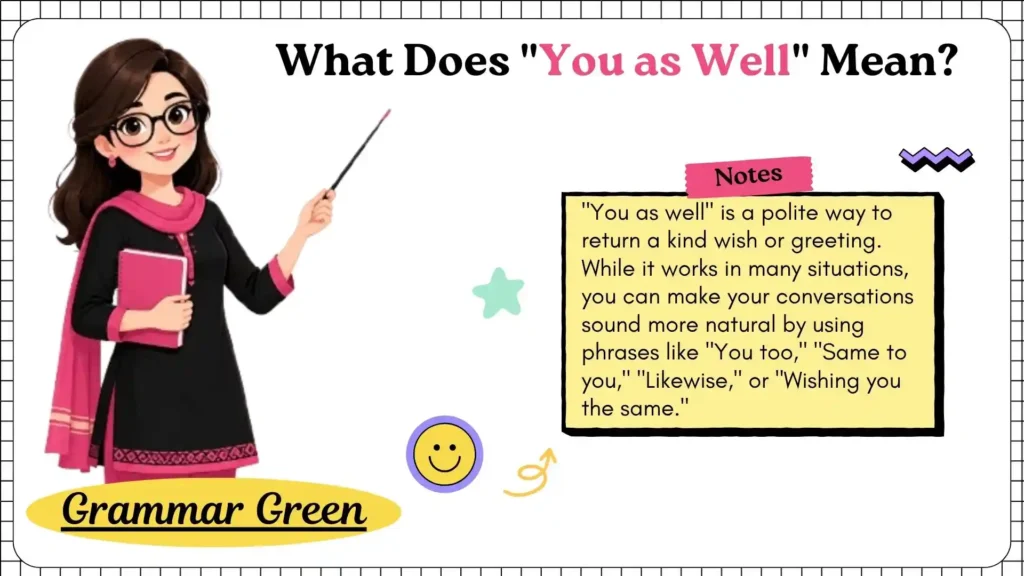
“You as well” is a polite way to return a kind wish or greeting. While it works in many situations, you can make your conversations sound more natural by using phrases like “You too,” “Same to you,” “Likewise,” or “Wishing you the same.”
The best choice depends on whether you are speaking with friends, coworkers, clients, or family. Using the right expression helps you communicate warmly and confidently.
You might also like that: Other Ways to Say God Bless You
What Does “You as Well” Mean?
“You as well” means “I wish the same for you.” People use it to return a kind wish after someone says something like “Have a great day,” “Take care,” or “Good luck.” It is a polite and respectful response that fits both spoken and written English.
Although this phrase is common, it is not your only option. Choosing different English expressions makes your conversations sound more natural. Whether you need a professional alternative, a casual reply, or a friendly response, using varied phrases keeps your communication fresh and engaging.
⭐ 10+ Other Ways to Say “You as Well”
Below are some of the best alternatives to “You as Well.” Each phrase works in different situations, so choose the one that matches the tone of your conversation.
1. You Too
😊 Best for: Everyday conversations
This is the most common and natural replacement. It is short, friendly, and works in almost every casual situation.
Example:
“Have a wonderful weekend!”
“You too!”
2. Same to You
😊 Best for: Friendly conversations
This phrase politely returns the same wish. It sounds warm and natural.
Example:
“Have a safe trip.”
“Same to you!”
3. Likewise
💼 Best for: Professional communication
Likewise sounds polished and professional. It is a great choice for emails, meetings, and workplace conversations.
Example:
“It was nice meeting you.”
“Likewise.”
4. Right Back at You
😄 Best for: Close friends
This expression feels cheerful and relaxed. It adds personality to your response.
Example:
“Have an amazing day!”
“Right back at you!”
5. Wishing You the Same
🌸 Best for: Warm conversations
This option feels thoughtful and sincere. It works well in both personal and professional settings.
Example:
“I hope you have a relaxing evening.”
“Wishing you the same.”
6. And to You Too
🤝 Best for: Polite replies
This phrase sounds a little more formal than “You too.” It works well when speaking respectfully.
Example:
“Best wishes!”
“And to you too.”
7. I Hope the Same for You
💙 Best for: Heartfelt messages
Use this phrase when you want your reply to sound genuine and caring.
Example:
“I hope everything goes well.”
“I hope the same for you.”
8. Back at You
🎉 Best for: Casual conversations
This short response feels playful and friendly.
Example:
“Enjoy your vacation!”
“Back at you!”
9. The Same Goes for You
✨ Best for: Everyday English
This phrase clearly returns the same wish while sounding natural.
Example:
“Take care of yourself.”
“The same goes for you.”
10. Wishing You All the Best Too
🌟 Best for: Formal and professional situations
This expression sounds kind and respectful. It is ideal for emails and farewell messages.
Example:
“Good luck with your new job.”
“Wishing you all the best too.”
📌 Professional Alternatives to “You as Well”
When speaking with coworkers, clients, or managers, choose polite and professional language. Good options include “Likewise,” “Wishing you the same,” “And to you too,” and “I wish you the same.” These phrases sound respectful without being too formal.
💡 Tip: Professional replies help build positive workplace relationships. They also make your business communication and email replies sound polished and friendly.
😊 Casual Alternatives for Everyday Conversations
When talking with friends or family, simple phrases work best. You can say “You too,” “Same to you,” “Back at you,” or “Right back at you.” These expressions feel relaxed and natural, making your conversations more enjoyable.
Using different casual alternatives prevents repetition. It also makes your everyday English sound more fluent without making your response complicated.
📧 Using These Phrases in Emails
Professional emails often end with kind wishes such as “Have a great day” or “Take care.” Instead of always replying with “You as well,” try “Likewise,” “Wishing you the same,” or “Best wishes to you as well.”
These professional alternatives sound polite while keeping your message warm. They are perfect for clients, coworkers, and business partners because they create a positive impression.
💬 Examples in Daily Conversations
Different situations call for different responses. Here are a few examples.
| 🗣️ Someone Says | ✅ You Can Reply |
| Have a great day! | You too! |
| Stay safe! | Same to you! |
| Good luck! | Wishing you the same! |
| Enjoy your weekend! | Right back at you! |
| Take care! | Likewise! |
This table helps you choose the most natural response phrases for everyday conversations.
⚖️ When Should You Use Each Phrase?
Not every phrase fits every situation. “You too” works well with friends and family, while “Likewise” is better for work. “Right back at you” sounds fun, but it may not suit formal conversations.
⭐ Choosing the right phrase depends on your relationship with the other person and the setting. Matching your tone helps your reply sound sincere and appropriate.
🚫 Common Mistakes to Avoid
Many people use “You as well” correctly, but they sometimes repeat it too often. Using the same reply in every conversation can make your speech sound repetitive.
Another mistake is choosing casual expressions like “Back at you” during formal meetings or professional emails. Always think about the situation before replying. Selecting the right English phrase makes your communication smoother and more natural.
📊 Comparison Table
| Phrase | Best For | Tone |
| You Too | Everyday conversations | Casual |
| Same to You | Friends & family | Friendly |
| Likewise | Workplace | Professional |
| Right Back at You | Close friends | Fun |
| Wishing You the Same | Personal & business | Warm |
| And to You Too | Formal replies | Polite |
| The Same Goes for You | General use | Neutral |
❓ Frequently Asked Questions
Is “You as Well” grammatically correct?
✅ Yes. It is a grammatically correct and polite way to return a kind wish.
Is “You Too” better than “You as Well”?
Both are correct. “You too” sounds more natural in everyday conversations, while “You as well” feels slightly more formal.
What is the most professional alternative?
“Likewise” is one of the best professional alternatives because it sounds respectful, concise, and natural.
Can I use “You as Well” in business emails?
Yes. However, phrases like “Likewise” or “Wishing you the same” often sound more polished in professional communication.
🎯 Conclusion
Learning other ways to say “You as Well” helps you communicate with confidence in every situation. Whether you choose “You too,” “Same to you,” “Likewise,” or “Wishing you the same,” each phrase adds variety and makes your conversations feel more natural. By matching your response to the tone and setting, you can improve your English conversation skills, build stronger relationships, and leave a positive impression in both personal and professional communication.