When someone shares positive news, your response can make the conversation feel warmer and more meaningful. While “Happy to hear that” is a kind and common phrase, using it repeatedly can sound repetitive. Learning other ways to say happy to hear that helps you express your feelings more naturally, whether you’re chatting with a friend, writing a professional email, or speaking in a workplace setting. Choosing the right words also improves your communication skills and makes your message feel more genuine.
In this guide, you’ll discover different ways to say happy to hear that for formal, casual, and professional communication. We’ll be happy to hear synonyms, practical alternative expressions, and real sentence examples that fit different situations. You’ll also learn when to use happy to hear that, how to respond to good news politely, and which phrases work best in business English, conversational English, and everyday conversations.
🚀 Quick Answer
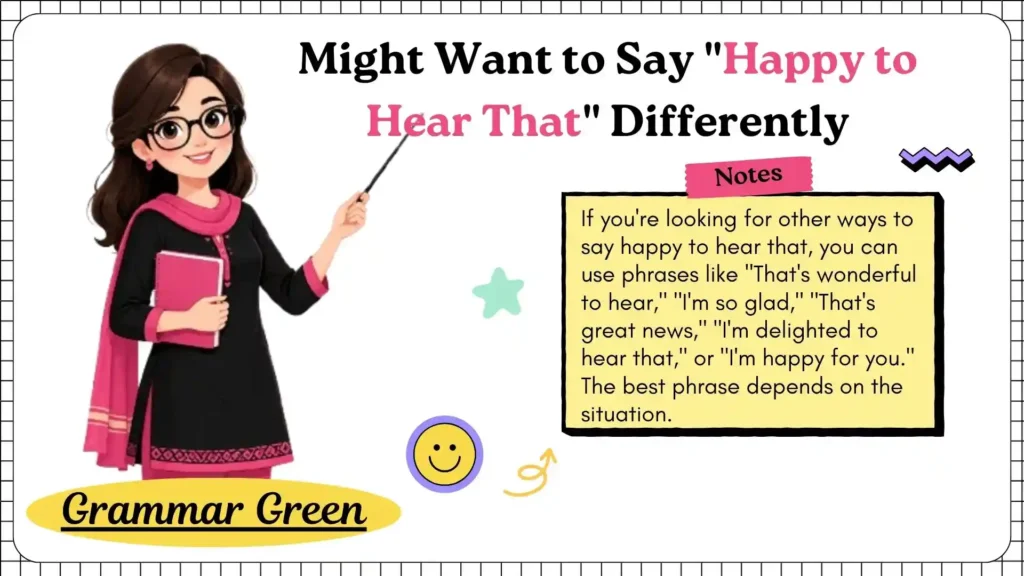
If you’re looking for other ways to say happy to hear that, you can use phrases like “That’s wonderful to hear,” “I’m so glad,” “That’s great news,” “I’m delighted to hear that,” or “I’m happy for you.” The best phrase depends on the situation.
Some work well in professional communication, while others fit casual chats with friends or family. Using different English expressions makes your conversations sound more natural and keeps your responses fresh. The examples below will help you choose the right phrase for every occasion.
🌟 Why You Might Want to Say “Happy to Hear That” Differently
Using the same response again and again can make your conversations feel repetitive. Learning different ways to say happy to hear improves your communication skills and helps you express genuine emotions. Whether you’re writing a professional email, talking with a colleague, or replying to a friend, the right alternative expression creates a stronger connection. It also shows that you’ve carefully listened to the other person’s positive news, making your response feel more thoughtful and personal.
💬 30 Other Ways to Say Happy to Hear That
📋 Quick Comparison Table
| 😊 Phrase | 🎯 Best Used For | 🗣️ Tone |
| That’s wonderful to hear. | Good news | Friendly |
| I’m so glad to hear that. | Everyday conversation | Casual |
| That’s great news. | Any situation | Neutral |
| I’m delighted to hear that. | Emails & business | Formal |
| I’m thrilled for you. | Big achievements | Enthusiastic |
| What fantastic news! | Celebrations | Excited |
| I’m pleased to hear that. | Workplace | Professional |
| That’s amazing! | Friends | Casual |
| I’m happy for you. | Personal success | Warm |
| That’s excellent news. | Professional updates | Formal |
| What wonderful news! | Family & friends | Friendly |
| It’s great to hear that. | Daily conversation | Neutral |
| I’m relieved to hear that. | Difficult situations | Supportive |
| That made my day. | Personal conversations | Warm |
| You must be so happy! | Achievements | Encouraging |
😊 1. That’s Wonderful to Hear
That’s wonderful to hear is one of the best happy to hear synonyms because it sounds warm and positive. You can use it when someone shares exciting or uplifting news. This phrase works well in both conversational English and friendly emails. It shows real happiness without sounding too formal.
Example: That’s wonderful to hear! I knew your hard work would pay off.
🎉 2. I’m So Glad to Hear That
This phrase is simple, natural, and commonly used by native English speakers. It fits conversations with friends, family, and coworkers. If you want a friendly response to good news, this expression is a great choice.
Example: I’m so glad to hear that your interview went well.
⭐ 3. That’s Great News
That’s great news and is a short and useful alternative to being happy to hear that. It works in almost every situation, from personal chats to workplace conversations. Because it’s easy to understand, it’s a great phrase for everyday English.
Example: That’s great news! Congratulations on your new job.
💼 4. I’m Delighted to Hear That
If you need a phrase for business English or a professional email, this is an excellent choice. I’m delighted to hear that it sounds polite, respectful, and professional while still expressing genuine happiness.
Example: I’m delighted to hear that your proposal has been approved.
🌈 5. I’m Thrilled for You
Use this phrase when someone shares a major achievement or life event. It expresses strong excitement and makes your reply feel sincere. It’s perfect for celebrating promotions, graduations, or personal milestones.
Example: I’m thrilled for you! You truly deserve this success.
🎊 6. What Fantastic News!
This energetic expression is ideal for exciting announcements. It adds enthusiasm and makes your response feel lively. Use it with friends, family, or colleagues who have shared something joyful.
Example: What fantastic news! I can’t wait to celebrate with you.
🤝 7. I’m Pleased to Hear That
This is one of the most useful professional ways to say happy to hear that. It sounds polite without being too formal, making it suitable for meetings, client communication, and workplace emails.
Example: I’m pleased to hear that the project was completed on time.
😄 8. That’s Amazing!
Sometimes a short response says everything. That’s amazing! It is friendly, natural, and full of excitement. It works especially well in text messages and casual conversations with people you know well.
Example: That’s amazing! You finally reached your goal.
❤️ 9. I’m Happy for You
This phrase focuses on the other person’s success instead of the news itself. It shows kindness and support, making it one of the best supportive phrases for personal conversations.
Example: I’m happy for you. You’ve worked so hard for this moment.
🏆 10. That’s Excellent News
When you want to sound more professional, excellent news is a strong choice. It fits professional communication, workplace updates, and business emails while still sounding warm.
Example: That’s excellent news. Thank you for sharing the update.
🌸 11. What Wonderful News!
This phrase expresses sincere happiness and appreciation. It’s commonly used when someone shares family news, personal achievements, or happy life events. It sounds warm and encouraging.
Example: What wonderful news! Your family must be so excited.
💡 12. It’s Great to Hear That
This simple expression works well in almost every conversation. It feels natural and polite, making it one of the safest alternative expressions to use in both personal and professional settings.
Example: It’s great to hear that everything went smoothly.
🤗 13. I’m Relieved to Hear That
Use this phrase when someone shares good news after a difficult or stressful situation. It expresses empathy and shows that you care about the person’s well-being.
Example: I’m relieved to hear that you’re feeling much better now.
🌞 14. That Made My Day
This warm response tells the speaker that their good news also brought happiness to you. It’s best used with close friends or family members.
Example: That made my day! I’m so happy everything worked out.
🎯 15. You Must Be So Happy!
Instead of talking about your own feelings, this phrase highlights the other person’s excitement. It creates a positive connection and encourages further conversation.
Example: You must be so happy! Congratulations on your achievement.
❓ Frequently Asked Questions
H3 1. What can I say instead of “Happy to hear that”?
There are many other ways to say happy to hear that, including “That’s wonderful to hear,” “I’m so glad to hear that,” “That’s great news,” “I’m delighted to hear that,” and “I’m happy for you.” Choose a phrase based on the situation. Friendly conversations often need a casual response, while professional communication and business English usually call for a more formal expression.
2. How do you say “Happy to hear that” professionally?
For the workplace or a professional email, use phrases like “I’m pleased to hear that,” “I’m delighted to hear that,” “That’s excellent news,” or “It’s great to hear that.” These professional alternatives sound polite, respectful, and natural while expressing genuine appreciation for the positive news.
3. Is “Happy to hear that” formal or informal?
“Happy to hear that” is generally a neutral expression. It works in both casual and professional situations, but it may sound a little simple in formal writing. If you want a more polished tone, use formal alternatives like “I’m delighted to hear that” or “I’m pleased to hear that.”
4. What is the best response to someone’s good news?
The best response to good news depends on the relationship and situation. Friendly options include “That’s amazing!” and “I’m so happy for you!” In a workplace setting, “That’s excellent news” or “I’m pleased to hear that” are better choices. Matching your response to the context makes your communication more meaningful.
5. Why should I learn different ways to say “Happy to hear that”?
Learning different ways to say happy to hear that helps improve your English vocabulary, communication skills, and confidence. It keeps your conversations fresh, avoids repetition, and allows you to choose the most suitable alternative expression for personal chats, professional communication, emails, and everyday conversations.
🎯 Conclusion
Using other ways to say happy to hear that makes your conversations more engaging, thoughtful, and natural. Whether you need casual alternatives, formal alternatives, or professional ways to say happy to hear that, choosing the right phrase helps you express genuine happiness and support. From “That’s wonderful to hear” to “I’m delighted to hear that,” each expression has its own tone and purpose. Practice these happy to hear synonyms in daily conversations, emails, and workplace communication to build stronger relationships and communicate with confidence.
1 thought on “Other Ways to Say Happy to Hear That Without Sounding Repetitive”