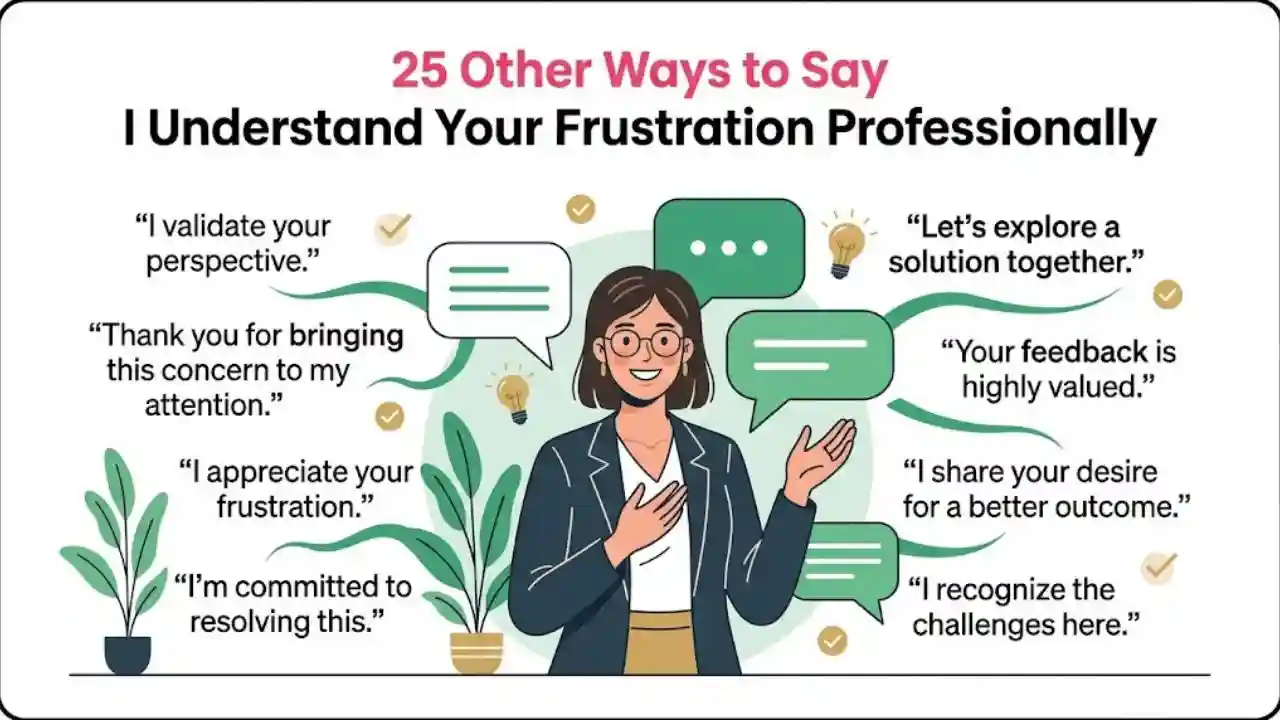
When someone is upset, disappointed, or frustrated, saying “I understand your frustration” can show empathy and respect. However, using the same phrase too often may make your professional communication sound repetitive or scripted. Choosing a better phrase can help you sound more natural while still showing that you care about the other person’s concern.
Whether you are replying to a customer complaint, client, coworker, employee, or professional email, the right words can make a difficult conversation easier. Below, you will find 25 professional alternatives to “I understand your frustration,” along with examples and simple tips for choosing the right phrase.
Quick Answer
If you need a quick answer, you can replace “I understand your frustration” with phrases such as “I understand your concern,” “I hear your concerns,” or “I can see why this has been frustrating.” Each option gives your response a slightly different tone.
| Situation | Best Alternative | Tone |
| 📧 Formal email | I understand your concern. | Formal |
| 💬 Customer complaint | I can see why this has been frustrating. | Empathetic |
| 🤝 Workplace issue | I understand where you’re coming from. | Diplomatic |
| ⏳ Service delay | I appreciate how frustrating the delay must be. | Professional |
| 🛠️ Strong complaint | I hear your concerns, and I’d like to help. | Supportive |
The key is to choose a phrase that matches the person’s feelings, situation, and relationship with you.
TL;DR
There are many useful professional alternatives to “I understand your frustration.” The best choices include “I understand your concern,” “I hear your concerns,” “I recognize your frustration,” and “I can see why this has been frustrating.”
Choose your words based on the situation and tone. Use formal phrases in business emails, warmer phrases with coworkers, and calm empathetic language with customers. Most importantly, do not stop at empathy. When possible, combine understanding + action to show that you heard the person’s concern and are ready to help.
You Might Also Like That: SMH Meaning
What Does “I Understand Your Frustration” Mean?
The phrase “I understand your frustration” means that you recognize another person’s difficult feelings or situation. It shows empathy, acknowledgment, and emotional awareness without necessarily saying that you agree with everything they believe.
In professional communication, this phrase can help people feel heard and respected. You can use it when dealing with customer complaints, workplace concerns, difficult conversations, or professional emails. However, understanding someone’s frustration does not mean accepting blame or agreeing with every statement. You can acknowledge a person’s feelings while still staying calm, fair, and focused on finding a practical solution.
Is “I Understand Your Frustration” Professional and Polite?
Yes, “I understand your frustration” is normally professional and polite. It works especially well when someone has experienced a delay, mistake, inconvenience, or poor service. The phrase shows that you recognize their feelings instead of ignoring them.
However, context matters. If you repeat the phrase every time someone complains, it may sound like a generic customer-service response. You can make your language more natural by using alternatives such as “I understand your concern” or “I can see why this has been difficult.” In professional emails and customer service, it also helps to follow empathy with a clear action or solution.
25 Professional Alternatives to “I Understand Your Frustration”
The following phrases can help you communicate empathy professionally without repeating the same sentence. Some sound formal, while others feel warmer and more conversational. Choose the one that fits your situation.
1. I Understand Your Concern
This is one of the safest professional alternatives to “I understand your frustration.” It sounds polite, clear, and respectful. You can use it in emails, meetings, customer service, and workplace conversations.
Example: “I understand your concern regarding the delayed order, and I will check the status for you.”
2. I Can See Why This Has Been Frustrating
This phrase sounds natural and shows that you recognize the person’s experience. It works particularly well with customers and clients.
Example: “I can see why this has been frustrating, especially after you have already contacted us twice.”
3. I Understand Where You’re Coming From
Use this during a workplace disagreement or difficult conversation. It shows that you respect the other person’s perspective.
Example: “I understand where you’re coming from, and I appreciate you explaining your concerns.”
4. I Hear Your Concerns
“I hear your concerns” shows active listening. It works well in customer service, meetings, and professional communication.
Example: “I hear your concerns, and I would like to discuss the available options with you.”
5. I Recognize Your Frustration
This phrase directly acknowledges someone’s feelings while keeping a professional tone.
Example: “I recognize your frustration with the repeated delay, and I appreciate your patience.”
6. I Appreciate How Difficult This Has Been
This option adds warmth to your response. Use it when someone has dealt with a challenging situation for some time.
Example: “I appreciate how difficult this has been for you, and I am working to find a solution.”\

You Might Also Like That: SMH Meaning
7. I Can See Why You Feel This Way
This phrase provides emotional validation without saying that you agree with every part of the complaint.
Example: “I can see why you feel this way after receiving conflicting information.”
8. I Acknowledge Your Concerns
This is a more formal option that works well in professional emails and business communication.
Example: “I acknowledge your concerns and will make sure the matter receives proper attention.”
9. I Understand the Difficulty Here
This simple phrase works when someone faces a problem that requires time, effort, or patience.
Example: “I understand the difficulty here, and I appreciate you taking the time to explain the issue.”
10. I Know This Has Been Challenging
This phrase sounds supportive without becoming overly emotional. It works well with customers, employees, and coworkers.
Example: “I know this has been challenging, and I appreciate your cooperation throughout the process.”
11. I Can Imagine How Frustrating This Must Be
This shows compassionate understanding without claiming that you know exactly how someone feels.
Example: “I can imagine how frustrating this must be after waiting so long for an update.”
12. I Understand Your Perspective
This works especially well during workplace discussions and professional disagreements.
Example: “I understand your perspective, and I think we can find a solution that addresses both concerns.”
13. I Hear Your Frustration
This short phrase shows active listening and emotional acknowledgment.
Example: “I hear your frustration, and I want to make sure we address the main issue.”
14. I Recognize the Challenges You’re Facing
Use this when someone has several problems rather than one simple complaint.
Example: “I recognize the challenges you’re facing, and I appreciate your patience while we work through them.”
15. I Understand Your Experience
This phrase focuses on the person’s situation instead of simply repeating the word “frustration.”
Example: “I understand your experience, and I can see why you expected a different outcome.”
16. I Appreciate Your Patience in This Matter
This is useful in customer service communication when someone has experienced a delay.
Example: “I appreciate your patience in this matter while our team investigates the issue.”
17. I Understand Why This Is Disappointing
Use this when disappointment is the main emotion.
Example: “I understand why this is disappointing, especially given the expectations we discussed.”
18. I Can See Why This Is Difficult
This simple phrase works in many professional situations.
Example: “I can see why this is difficult, and I would like to help you explore the next steps.”
19. I Respect Your Feelings
This phrase shows that you take someone’s emotions seriously, especially during sensitive conversations.
Example: “I respect your feelings about the situation, and I appreciate you sharing your perspective.”
20. I Understand the Inconvenience This Has Caused
This works particularly well for customer complaints and service problems.
Example: “I understand the inconvenience this has caused, and I apologize for the delay.”
21. I’m Aware of How Upsetting This Can Be
Use this when a situation has caused stress or disappointment.
Example: “I’m aware of how upsetting this can be, and we are reviewing the issue carefully.”
22. I Acknowledge How Challenging This Is
This formal expression works well in business communication and professional emails.
Example: “I acknowledge how challenging this has been and appreciate your continued cooperation.”
23. I Know This Situation Is Difficult
This straightforward phrase works in emails, meetings, and direct conversations.
Example: “I know this situation is difficult, and I want to help you move forward.”
24. I Get Where You’re Coming From
This option sounds warmer and more conversational. It can work well with coworkers and in less formal workplace conversations.
Example: “I get where you’re coming from, and I understand why the change raised concerns.”
25. I Empathize With Your Situation
This phrase clearly communicates professional empathy and works well when you want a caring but formal tone.
Example: “I empathize with your situation and appreciate the opportunity to help resolve the matter.”
Professional Alternatives for Emails
Professional emails need a careful balance of empathy, clarity, and action. Instead of repeating “I understand your frustration,” choose a phrase that directly addresses the person’s concern. For example, “I understand your concern regarding the delay” works well for a client, while “I appreciate how difficult this situation has been” creates a warmer tone.
When responding to a complaint email, avoid using empathy as an empty statement. A strong professional email response should acknowledge the problem and explain what you will do next. This approach helps your message sound genuine and can build trust with customers, clients, coworkers, and business partners.
Example for a Customer Email
“I understand your concern regarding the delayed delivery. I have contacted our shipping team and will update you as soon as I receive more information.”
Example for a Workplace Email
“I understand your concern about the new deadline. Let’s review the current workload and discuss the best way forward.”
Professional Alternatives for Customer Service
Customer service requires more than simply acknowledging a frustrated customer. A strong response should show empathy, active listening, and a willingness to help. Phrases such as “I can see why this has been frustrating” or “I understand the inconvenience this has caused” can help lower tension.
When handling customer complaints, connect your empathy statement with action. For example, say, “I understand why this has been frustrating. Let me check the order status and see what I can do.” This makes your response feel less scripted and shows that you are focused on solving the problem.
A Simple Customer-Service Formula
Use this simple pattern when responding to a difficult customer:
| Step | What to Do |
| 1️⃣ Acknowledge | Recognize the concern |
| 2️⃣ Empathize | Show understanding |
| 3️⃣ Act | Explain what you can do |
| 4️⃣ Update | Keep the person informed |
This method can make customer service communication calmer and more helpful.
Professional Alternatives for Workplace Conversations
Workplace communication often involves disagreements, deadlines, workloads, or team decisions. In these situations, phrases such as “I understand your perspective,” “I understand where you’re coming from,” and “I recognize the challenges you’re facing” can keep the conversation respectful.
When responding to a frustrated coworker, employee, or manager, listen before giving your opinion. You do not need to agree with everything the other person says. Professional empathy means recognizing someone’s experience and responding with respect. This can make difficult conversations easier and support better workplace communication.
Example for a Coworker
“I understand where you’re coming from. The last-minute change has made the project harder to manage.”
Example for an Employee
“I recognize the challenges you’re facing. Let’s discuss what support you need to move forward.”
How to Choose the Right Alternative
The best alternative depends on the situation, relationship, and tone you want to create. For formal business emails, phrases such as “I acknowledge your concerns” or “I understand your concern” work well. For customer service, “I can see why this has been frustrating” sounds more personal. During workplace disagreements, “I understand your perspective” creates a diplomatic tone.
Think about what the other person needs. If they need emotional support, choose warmer language. If they have made a complaint, acknowledge the issue clearly. If they need a solution, combine empathy with action.
| Situation | Recommended Tone | Example |
| 📧 Formal email | Formal | I acknowledge your concerns. |
| ☎️ Customer complaint | Empathetic | I can see why this has been frustrating. |
| 🤝 Workplace disagreement | Diplomatic | I understand your perspective. |
| ⏳ Service delay | Understanding | I appreciate your patience. |
| 🛠️ Difficult issue | Supportive | I’d like to help resolve this. |
How to Sound Empathetic Without Sounding Scripted
Good professional empathy should sound natural rather than copied from a customer-service script. Instead of repeating the same sentence, mention the specific problem. For example, replace “I understand your frustration” with “I can see why waiting three days for an update has been frustrating.” This shows that you actually listened.
You should also follow empathy with a useful action. Tell the person what you can do next instead of making a vague promise. The combination of acknowledgment, empathy, and action makes your response stronger and more human.
Use Specific Language
Generic: “I understand your frustration.”
Better: “I can see why the delay has been frustrating after you were expecting an update yesterday.”
Specific wording makes your response feel more personal and sincere.
Phrases to Avoid When Someone Is Frustrated
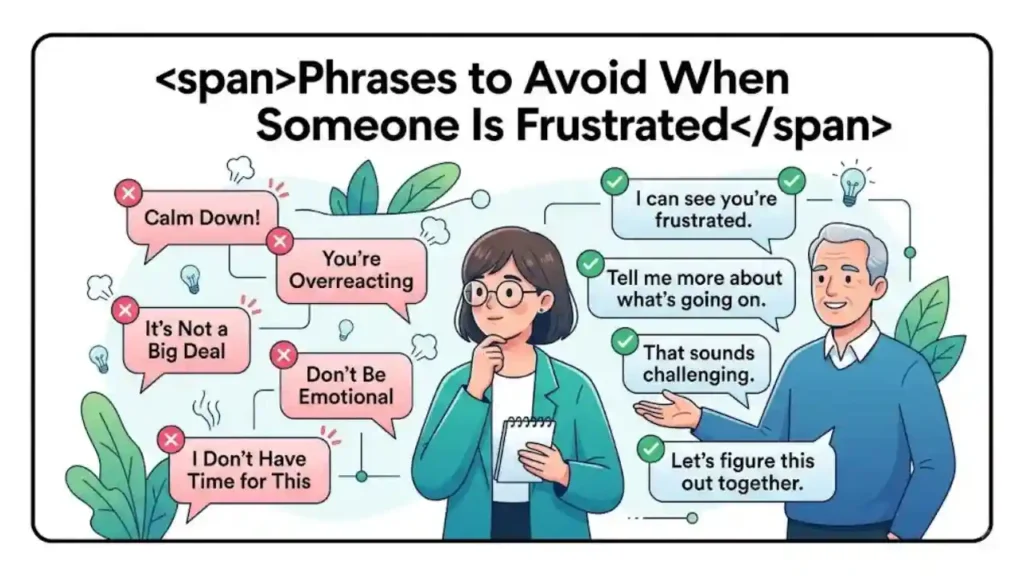
Some responses can make a difficult situation worse, even when you have good intentions. Avoid phrases that dismiss feelings, sound defensive, or shift blame. Statements such as “You need to calm down,” “There is nothing I can do,” or “That is not my problem” can make people feel ignored.
You should also avoid repeating generic empathy phrases without addressing the real issue. Professional communication should make people feel heard, respected, and supported. When possible, mention the specific concern and explain the next step. This approach can improve customer relationships, workplace communication, and difficult conversations.
Avoid These Common Mistakes
❌ “Calm down.” — Sounds dismissive.
❌ “It’s not my fault.” — Sounds defensive.
❌ “There is nothing I can do.” — Ends the conversation.
❌ “I already told you.” — Can sound rude.
❌ “You are overreacting.” — Minimizes feelings.
Instead, acknowledge the concern and focus on what you can do next.
You Might Also Like That: SMH Meaning
FAQs About Saying
Is “I Understand Your Frustration” Professional?
Yes. “I understand your frustration” is generally polite and professional. It works well in customer service, workplace communication, and professional emails. However, using different phrases can make your response sound more natural and less repetitive.
What Can I Say Instead of “I Understand Your Frustration”?
You can say “I understand your concern,” “I hear your concerns,” “I recognize your frustration,” or “I can see why this has been difficult.” Choose the phrase that best matches the situation and the level of formality you need.
How Do I Say It in a Professional Email?
Try “I understand your concern regarding this matter” or “I appreciate how frustrating this situation has been.” Then explain what action you will take. This makes the email more helpful and shows that you are not simply using an empathy phrase.
How Do I Respond to an Angry Customer Professionally?
Start by acknowledging the concern, then show empathy and offer help. For example: “I can see why this has been frustrating. Let me look into the issue for you.” Avoid arguing, blaming the customer, or making promises you cannot keep.
Is “I Hear You” Professional?
Yes, but “I hear you” has a warmer and more conversational tone. It works well in workplace conversations and customer service. For a very formal business email, however, “I understand your concern” may sound more appropriate.
Conclusion
There are many useful professional alternatives to “I understand your frustration.” Some of the best options include “I understand your concern,” “I hear your concerns,” “I recognize your frustration,” and “I can see why this has been frustrating.”
The right phrase depends on the situation, relationship, and tone. Use formal wording in business emails, warmer language with coworkers, and calm empathetic phrases with customers. Most importantly, do not stop at empathy. When possible, combine understanding + action to show that you heard the person’s concern and are ready to help.