Have you ever wanted a better way to say “Did you know” without sounding repetitive? Whether you’re writing an article, sending a professional email, giving a presentation, or simply starting a conversation, using fresh expressions can make your message more engaging. Learning other ways to say “Did You Know” helps you capture attention, improve your writing, and communicate ideas more naturally. Instead of repeating the same phrase, you can choose alternatives that match your audience, purpose, and tone.
In this guide, you’ll discover 35+ other ways to say “Did You Know”, including formal alternatives, informal expressions, professional phrases, and academic options. Each alternative includes a clear explanation, the best situation to use it, and an example sentence. By the end of this article, you’ll know what you can say instead of “Did You Know” and how to choose the right phrase for emails, presentations, essays, blogs, conversations, and more.
Quick Answer
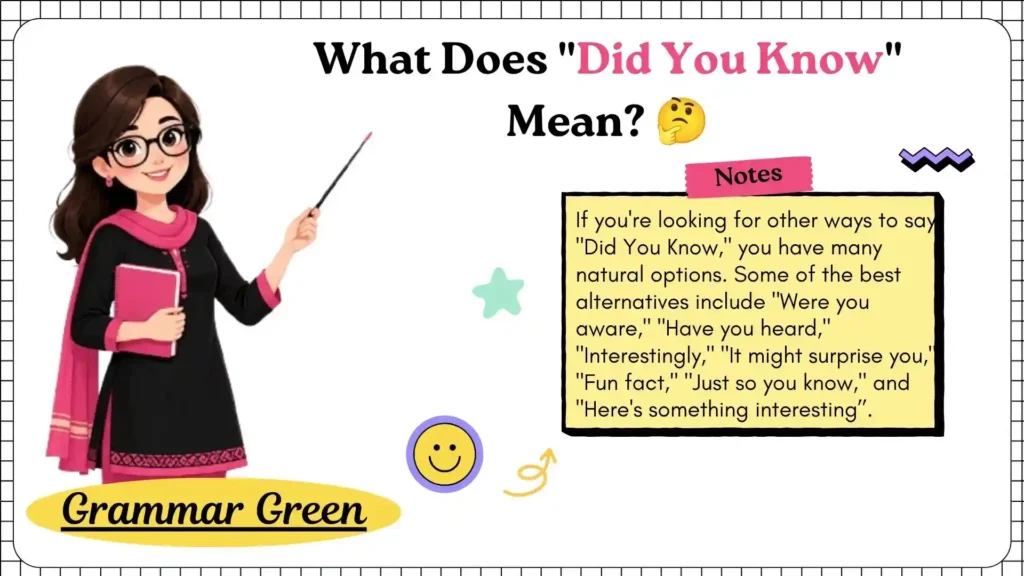
If you’re looking for other ways to say “Did You Know,” you have many natural options. Some of the best alternatives include “Were you aware,” “Have you heard,” “Interestingly,” “It might surprise you,” “Fun fact,” “Just so you know,” and “Here’s something interesting.” Each phrase works best in different situations, such as professional emails, academic writing, presentations, blogs, or casual conversations.
The right choice depends on your audience and purpose. Formal alternatives like “It may interest you to know” suit business and academic writing, while casual expressions such as “Guess what” or “Believe it or not” fit friendly conversations and social media. Using these alternatives makes your writing more engaging, avoids repetition, and keeps your content fresh and natural.
You might as;so like that; Ways to Say Wishing You the Best With
What Does “Did You Know” Mean? 🤔
The phrase “Did You Know” is a common way to introduce an interesting fact, share useful information, or grab someone’s attention. It creates curiosity and encourages readers or listeners to keep reading or listening. You can use it in articles, presentations, emails, conversations, and social media posts.
Although this phrase works well, using it repeatedly can make your writing feel repetitive. Learning other ways to say “Did You Know” helps you sound more natural and keeps your content fresh. Choosing the right alternative also lets you match the tone of your message, whether it is formal, casual, or professional.
Why Use an Alternative Instead of “Did You Know”? 💡
Using the same phrase again and again can make your writing less engaging. Replacing it with different ways to say “Did You Know” improves readability and helps you connect with your audience. It also shows a stronger vocabulary and makes your content more enjoyable to read.
Whether you write blogs, business emails, essays, or marketing content, using alternatives to “Did You Know” keeps your message interesting. Different situations call for different expressions, so choosing the right phrase makes your communication sound more natural and effective.
35+ Other Ways to Say “Did You Know” ✨
Here are some of the best alternatives to “Did You Know” that work in different situations.
| 💬 Alternative Phrase | 🎯 Best Used For |
| Were you aware | Professional writing |
| Have you heard | Casual conversation |
| You might find this interesting | Blogs and articles |
| Just so you know | Everyday communication |
| It may interest you to know | Formal writing |
| Believe it or not | Storytelling |
| Fun fact | Social media |
| Interestingly | Academic writing |
| Here’s something interesting | Presentations |
| It might surprise you | Marketing content |
| You may not realize | Informative articles |
| As it turns out | Blogs |
| Here’s a little-known fact | Educational content |
| Guess what | Friendly conversations |
| In case you didn’t know | Casual writing |
| It’s worth noting | Business writing |
| As a matter of fact | Professional communication |
| For your information | Emails |
| This may come as a surprise | Reports |
| Have you considered | Discussions |
These synonyms for “Did You Know” help you write naturally while matching the tone and purpose of your content.
Formal Alternatives to “Did You Know” 🎓
Formal alternatives work best when writing professional emails, reports, research papers, or official documents. They sound polite, respectful, and clear.
Professional Email Examples 📧
If you write emails, these phrases sound more professional than simply saying “Did You Know.”
- It may interest you to know
- For your information
- You may be interested to know
- It’s worth noting
Example:
It may interest you to know that our latest report is now available for download.
Business Writing Examples 💼
Business communication should sound confident and professional. These alternatives fit perfectly.
- As a matter of fact
- It is important to know
- You should know
- This may come as a surprise
Example:
It is important to know that customer satisfaction increased by 20% this quarter.
Casual Alternatives to “Did You Know” 😊
Casual expressions make conversations feel relaxed and friendly. They work well in blogs, social media posts, and everyday chats.
Popular casual alternatives include:
- Guess what
- Have you heard
- Believe it or not
- Fun fact
- Just so you know
- In case you didn’t know
These phrases create curiosity without sounding too formal. They also make your writing feel more personal and conversational.
Academic Alternatives to “Did You Know” 📚
Academic writing requires a formal and objective tone. Instead of using “Did You Know,” choose phrases that present information clearly and professionally.
Some excellent academic alternatives include:
- Interestingly
- Research shows that
- Evidence suggests
- Studies indicate
- It is worth noting
- It has been found that
These expressions strengthen essays, research papers, reports, and educational articles while maintaining credibility.
Professional Alternatives for Workplace Communication 👔
Professional communication should always sound clear, respectful, and informative. Using professional alternatives to “Did You Know” helps you share information without sounding too casual.
Good workplace phrases include:
- For your information
- Please note
- You may be interested to know
- It is important to know
- As a reminder
- Keep in mind
These alternatives improve emails, reports, team updates, and client communication while maintaining a professional tone.
Alternative Phrases for Presentations and Speeches 🎤
A strong opening captures your audience’s attention immediately. Instead of saying “Did You Know,” use engaging phrases that create curiosity.
Try these alternatives:
- Here’s something interesting
- It might surprise you
- Have you ever wondered
- Consider this
- Imagine this
- Here’s an interesting fact
These phrases make presentations more interactive and encourage listeners to stay engaged from the beginning.
Better Ways to Introduce an Interesting Fact 🌟
If you want to introduce an interesting fact, choose an expression that matches your audience and writing style. This keeps your message fresh and avoids repeating the same opening.
Here are some excellent options:
- Fun fact
- Believe it or not
- Here’s a little-known fact
- You may not realize
- As it turns out
- Interestingly
- It might surprise you
Frequently Asked Questions ❓
What can I say instead of “Did You Know”?
You can replace “Did You Know” with phrases like “Were you aware,” “Have you heard,” “Interestingly,” “It might surprise you,” “Here’s something interesting,” or “Fun fact.” Choose the phrase that best matches your audience and the tone of your writing.
Is “Did You Know” a formal phrase?
No, “Did You Know” is generally considered a neutral phrase. While it works in many situations, formal writing often sounds better with alternatives like “It may interest you to know,” “It is worth noting,” or “For your information.”
Which alternative works best in professional emails?
For business emails, use professional phrases such as “Please note,” “For your information,” “You may be interested to know,” or “It is important to know.” These expressions sound polite, clear, and professional.
What is the best alternative for presentations?
If you’re giving a presentation, try attention-grabbing phrases like “Here’s something interesting,” “It might surprise you,” “Have you ever wondered,” or “Consider this.” These introductions quickly capture your audience’s interest.
Can I use “Fun Fact” instead of “Did You Know”?
✅ Yes. “Fun fact” is one of the most popular alternatives to “Did You Know.” It works especially well in blogs, social media posts, educational content, and casual conversations where you want to share an interesting or surprising piece of information.
Conclusion 🎯
Using other ways to say “Did You Know“ makes your writing more engaging, natural, and professional. Whether you’re creating a blog post, writing an email, preparing a presentation, or having a conversation, choosing the right phrase helps you communicate your message more effectively. Simple alternatives like “Interestingly,” “Were you aware,” “Have you heard,” and “It might surprise you” keep your content fresh while avoiding repetition.
Now that you know what you can say instead of “Did You Know,” choose the alternative that best fits your audience and purpose. By using the right expression in the right situation, you’ll improve your writing, capture readers’ attention, and make every piece of content more interesting and memorable.