
The phrase “welcome back” is commonly used when someone returns after a break, vacation, or absence. However, in many situations, repeating the same greeting can feel basic or overused. That is why people search for other ways to say welcome back, including welcome back alternatives, synonyms for welcome back, and different ways to say welcome back in both formal and casual contexts.
In daily communication, the right wording depends on the situation, tone, and relationship. You may need a professional welcome back message for emails, a friendly expression for friends, or a formal greeting for workplace communication. This article will help you explore polite, emotional, casual, and professional phrases for welcome back, so you can choose the most natural expression for any context.
⚡ Quick Answer
There are many other ways to say welcome back depending on tone and situation. You can use formal phrases, casual greetings, or professional workplace alternatives like “Great to have you back” or “Happy to see you return.”
These welcome back alternatives help you sound more natural in emails, chats, or social messages. Choosing the right expression depends on context, relationship, and communication style.
🟦 What Does “Welcome Back” Mean in English Communication
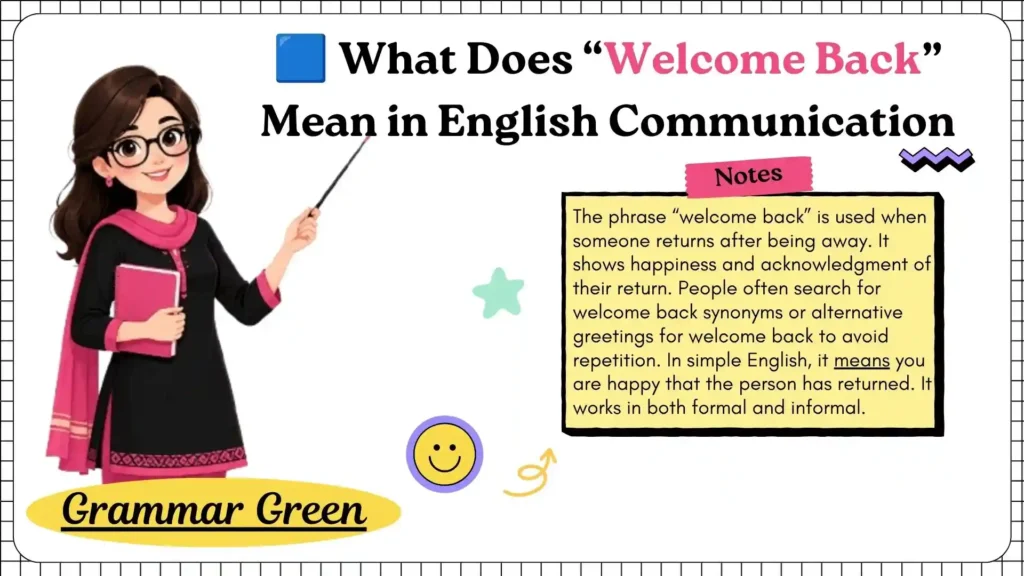
The phrase “welcome back” is used when someone returns after being away. It shows happiness and acknowledgment of their return. People often search for welcome back synonyms or alternative greetings for welcome back to avoid repetition. In simple English, it means you are happy that the person has returned. It works in both formal and informal situations. This phrase is common in workplaces, schools, and daily conversations.
🟦 Common Situations Where “Welcome Back” Is Used
“Welcome back” is used in many daily life situations. It is common in offices when employees return from leave, in schools when students come back, and in social groups when friends reconnect. People also use it in online communities and emails. That is why users search for different ways to say welcome back or phrases for welcome back depending on context. The goal is to match tone with the situation and sound more natural.
🟦 Formal Ways to Say Welcome Back
Formal alternatives are used in professional communication. Instead of repeating “welcome back,” you can say “We are glad to have you back”, “It’s a pleasure to see you return”, or “We sincerely welcome your return.” These formal welcome back phrases are useful in emails, meetings, or office messages. They sound respectful and professional. Using these expressions helps improve communication quality in business settings and avoids repetitive language in workplace conversations.
🟦 Casual Ways to Say Welcome Back
Casual expressions are used with friends, classmates, or close coworkers. You can say “Good to see you again”, “Nice to have you back”, or “Glad you’re back”. These informal welcome back expressions sound natural and friendly. They are commonly used in daily chats, texting, and social interactions. Casual phrases make communication feel warm and relaxed, especially when talking to people you know well in personal situations.
🟦 Emotional & Warm Ways to Say Welcome Back
Emotional phrases show care and happiness when someone returns. Examples include “We really missed you”, “It feels great to have you back with us”, and “So happy you’re here again.” These warm welcome back messages are used when you want to express strong feelings. They are common in personal relationships, close teams, or supportive environments. Emotional expressions help build connection and make the return feel special and valued.
🟦 Professional Workplace Alternatives to Welcome Back
In workplaces, tone matters a lot. Instead of basic greetings, professionals use phrases like “Welcome back to the team”, “Glad to have you rejoin us”, or “We appreciate your return.” These professional welcome back messages are useful in HR communication, manager emails, or team meetings. They help maintain respect while sounding natural. Workplace greetings should always match the level of formality required in business environments.
🟦 Email-Friendly Alternatives to Welcome Back
In emails, you should use clear and polite phrases. Examples include “We are happy to see your return”, “Welcome back to work”, and “It’s great to have you back in the team.” These welcome back message examples are perfect for HR emails or professional communication. Email greetings should stay simple, respectful, and direct. Using varied phrases improves readability and avoids repetitive language in business writing.
🟦 Short and Simple Alternatives to Welcome Back
Short phrases are useful in chats and quick messages. You can use “Welcome again”, “Good to have you”, or “Glad you’re here”. These simple English alternatives to welcome back are easy to understand and widely used. They work well in texting, group chats, or informal communication. Short expressions help keep conversations natural and fast without losing meaning or warmth.
🟦 Welcome Back Alternatives for Friends and Family
When talking to friends or family, you can use natural expressions like “We missed you a lot”, “It’s so good to see you again”, or “Happy you’re back home.” These friendly welcome back messages are emotional and warm. They are used in personal situations where closeness matters more than formality. Such phrases help strengthen relationships and show genuine happiness for someone’s return.
🟦 Synonyms for Welcome Back (Quick Reference List)
Here is a quick list of welcome back synonyms for fast use:
| Type | Examples |
| Formal | We are glad to have you back |
| Casual | Good to see you again |
| Friendly | Nice to have you back |
| Emotional | We missed you |
| Professional | Welcome back to the team |
These alternative greetings for welcome back help you choose the right tone easily in any situati
🟦 How to Choose the Right Alternative for Each Situation
Choosing the right phrase depends on context. In professional settings, use formal or workplace phrases. In casual chats, use friendly or short expressions. If emotions are involved, choose warm and emotional greetings. Many users search for different ways to say welcome back because tone matters in communication. Always match your phrase with the relationship, platform, and situation to sound natural and appropriate.
🟦 Common Mistakes When Replacing “Welcome Back”
Many people use alternatives without considering tone. One mistake is using overly formal phrases with friends. Another is using casual expressions in professional emails. Some also repeat the same phrase too often, which reduces impact. To avoid issues, use proper welcome back alternatives based on context. Always keep communication simple, clear, and natural. This helps your message sound correct and easy to understand.
❓ Frequently Asked Questions
❓ What are other ways to say welcome back?
You can use phrases like “Good to see you again”, “Glad you’re back”, or “We’re happy to have you back.”
❓ How do you say welcome back professionally?
Use formal welcome back phrases like “We are pleased to have you back” or “Welcome back to the team.”
❓ What is a better way to say welcome back?
Better options include warm, friendly, or professional alternatives depending on the situation.
❓ Can I use welcome back in emails?
Yes, but you can also use email-friendly alternatives like “It’s great to have you back in the team.”
🟢 Conclusion
Using other ways to say welcome back helps improve your communication and makes your language more natural. Whether you need formal, casual, emotional, or professional welcome back alternatives, choosing the right phrase depends on context. Instead of repeating the same greeting, using varied expressions improves clarity and tone. With the right welcome back synonyms and phrases, you can sound more confident and appropriate in any situation.