The phrase “thank you for letting me know” is a simple form of professional acknowledgment used in emails and workplace messages. It shows that you have received and understood information. In business communication, this phrase is often used to confirm updates, changes, or notifications in a polite and neutral way. Many people also search for ways to say thank you in an email or professional thank you responses, especially when they want more polished language.
In modern email etiquette, this expression helps maintain clarity and respect. It also signals good communication skills because it confirms receipt without adding confusion or delay.
Quick Answer
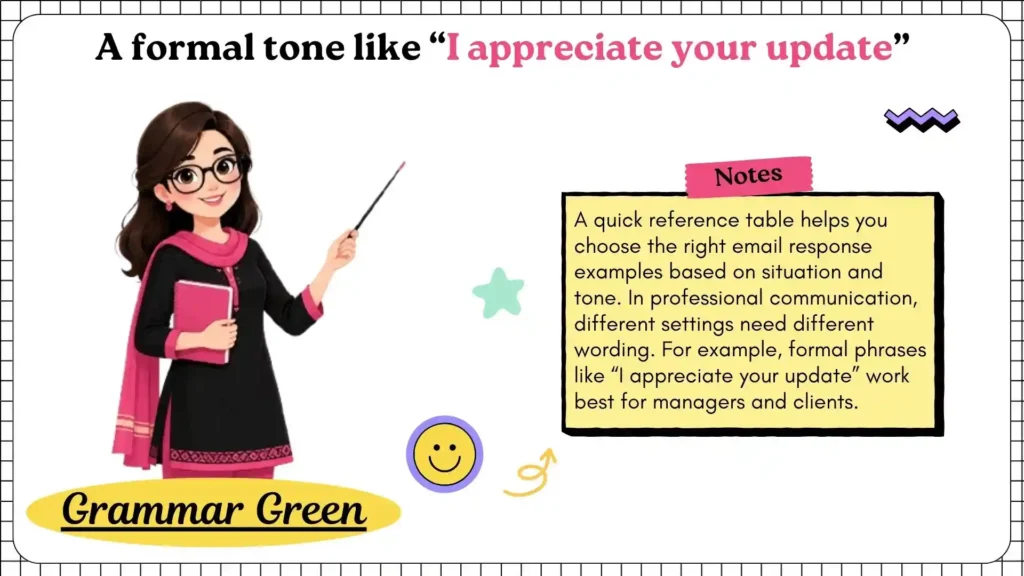
A quick reference table helps you choose the right email response examples based on situation and tone. In professional communication, different settings need different wording. For example, formal phrases like “I appreciate your update” work best for managers and clients, while neutral phrases like “Thank you for the information” suit general workplace use. Friendly replies such as “Got it, thanks” are good for team chats. Short responses like “Noted, thanks” are useful for fast replies. This improves business email etiquette and saves time in daily communication.
📌 How Tone Changes the Meaning of Your Response in Emails
Tone decides how your message feels to the reader, even if the words stay the same. In professional communication, a formal tone like “I appreciate your update” sounds respectful and structured. A casual tone like “Got it, thanks” feels relaxed and friendly. Both are correct, but context matters a lot. In business email etiquette, using the right tone improves clarity and avoids misunderstanding.
People often search for formal email phrases and friendly email response phrases because they want to adjust tone based on managers, clients, or teammates. Choosing the right tone builds stronger workplace relationships.
⚠️ Common Mistakes People Make When Responding to Updates or Information
Many people repeat the same phrase like “thank you for letting me know” in every email. This makes communication sound robotic. Another mistake is using very casual words in formal situations, which can look unprofessional in workplace email responses. Small errors in tone can affect how your message is received.
Also, people often ignore context. For example, using friendly language with clients may reduce trust. That’s why users search for email etiquette phrases and professional communication phrases to improve clarity and avoid common email mistakes.
🧠 Psychological Impact of Acknowledgment in Professional Communication
Acknowledgment is more powerful than it looks. When you respond with polite acknowledgment phrases, you show respect and attention. This builds trust and improves teamwork. In professional communication, even short replies help reduce confusion and keep conversations clear.
Simple responses like “Noted, thank you” improve workflow and avoid delays. That is why many professionals use email acknowledgment replies and confirmation messages in email. It helps create a positive working environment where people feel heard and valued.
📋 Best Practices for Writing Clear and Polite Email Acknowledgments
Good email acknowledgments should always be clear, short, and polite. Use simple professional email phrases like “Thank you for the update” or “I appreciate the information.” Avoid long sentences that make your message confusing. Clarity is the main goal in business email etiquette.
Also, always match your tone to the situation. Formal emails need structured language, while internal messages can be simple. Many users search for best email phrases for business communication because clear writing improves understanding and saves time in daily work.
🚀 Advanced Variations for High-Level Business Communication
In high-level communication, your wording should sound polished and confident. Instead of basic replies, use advanced phrases like “I acknowledge receipt of your message and appreciate the update” or “Thank you for the detailed information, I will proceed accordingly.” These are strong professional communication phrases used in corporate environments.
Such expressions show clarity and respect in executive emails. Many users search for formal business email phrases and advanced email acknowledgment examples because strong wording improves credibility and makes communication more professional.
📊 Quick Reference Table: Tone-Based Email Responses
| Tone Type | Example Phrase | Best Use Case |
| Formal | I appreciate your update | Managers, clients |
| Neutral | Thank you for the information | General workplace |
| Friendly | Got it, thanks | Team chats |
| Short | Noted, thanks | Fast replies |
This table helps you quickly choose the right email response examples based on the situation. It improves professional email responses and makes communication faster and more effective in daily work.
❓ Frequently Asked Questions
Q1: What are other ways to say “thank you for letting me know”?
A: You can use phrases like “I appreciate the update,” “Thank you for the information,” or “Noted with thanks.” These are common in professional email responses and work well in workplace communication.
Q2: What is the most professional way to respond to an update?
A: The most professional replies include “I acknowledge your message,” “Thank you for the update,” or “I appreciate you keeping me informed.” These fit well in business email etiquette and formal communication.
Q3: Can I use short replies like “Noted, thanks” in emails?
A: Yes, short replies like “Noted, thanks” or “Received with thanks” are acceptable in many workplaces. They are commonly used for fast email acknowledgment replies.
Q4: How do I make my email responses sound more natural?
A: Use varied email response examples instead of repeating the same phrase. Match tone with context—formal for clients, neutral for work, and friendly for colleagues.
Q5: Is “thank you for letting me know” too repetitive in emails?
A: It can feel repetitive if used often. That’s why professionals use alternative email phrases and professional communication phrases to keep messages fresh.
Q6: When should I avoid using “thank you for letting me know”?
A: Avoid it in high-level corporate communication or formal reports. Instead, use more structured phrases like “I acknowledge your update” or “Thank you for the information.”
Q7: What are polite email replies for being informed?
A: Polite replies include “Appreciate the update,” “Thanks for keeping me informed,” and “Thank you for the details.” These are useful in both formal and semi-formal settings.
📌 Conclusion
In professional writing, using different ways to say “thank you for letting me know” helps improve clarity, tone, and overall communication. Instead of repeating the same phrase, you can choose from formal, neutral, friendly, or short responses depending on the situation. This improves your email etiquette and makes your messages sound more natural and confident. Strong professional communication phrases also help build better relationships with managers, clients, and colleagues.
By practicing varied email response examples, you can write clearer, more effective, and more polished emails in any workplace situation.