The phrase “it would be greatly appreciated” is commonly used in professional and everyday communication to show politeness and gratitude in requests. It belongs to a broader group of polite request phrases used in emails, workplace messages, and formal writing. People often search for other ways to say it would be greatly appreciated, formal alternatives, or professional email phrases to avoid repetition and improve tone. In English communication, using varied expressions helps you sound more natural, respectful, and clear. This article will guide you through polite alternatives, business-ready phrases, and email examples so you can choose the right wording for any situation.
The phrase “it would be greatly appreciated” is a polite way to make requests in formal communication. You can replace it with many professional and natural alternatives depending on tone and context.For formal use, say: “I would be grateful for your assistance” or “your support would be highly valued.”
Quick Answer:
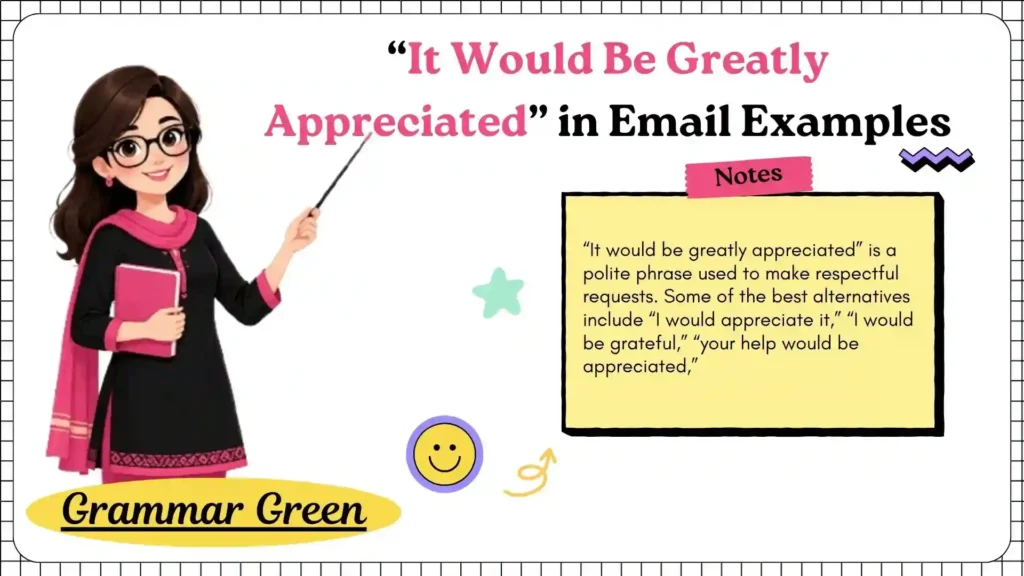
“It would be greatly appreciated” is a polite phrase used to make respectful requests. Some of the best alternatives include “I would appreciate it,” “I would be grateful,” “your help would be appreciated,”
“your support would be highly valued,” and “thanks in advance.” Choose a formal alternative for business emails and a simpler phrase for everyday conversations to sound natural, professional, and polite.
Formal Alternatives for Professional Writing
✍️ Professional & Business-Friendly Expressions
In formal communication, you should use clear and respectful language that sounds professional. Instead of repeating “it would be greatly appreciated,” you can say “your assistance would be appreciated,” “I would be grateful for your support,” or “your help would be highly valued.” These are strong formal alternatives for business writing. They work well in reports, official emails, and workplace communication. Using these professional email phrases helps you sound polite, confident, and respectful. They also improve clarity, which is very important in business communication and email etiquette.
Polite Alternatives for Everyday Communication
😊 Simple and Natural Daily Expressions
For everyday use, you don’t need very formal language. Simple phrases like “I’d really appreciate it,” “that would be great,” or “thanks a lot in advance” work very well. These are common polite expressions in English used in chats, casual emails, and friendly workplace messages. They keep your tone soft and respectful without sounding too heavy. Many people search for polite ways to say it would be greatly appreciated because they want natural and easy alternatives. These phrases help you communicate smoothly in daily life.
Professional Email Phrases for Requests
📧 Work-Ready Request Expressions
In emails, using the right tone is very important. Instead of repeating the same phrase, you can write “I would appreciate your prompt response,” “your feedback would be appreciated,” or “I would be grateful for your assistance.” These are widely used in professional communication phrases. They help you make polite requests in email writing while staying clear and respectful. Good email etiquette improves your image at work and makes your messages easier to understand. These phrases also fit well in customer service and office communication.
“It Would Be Greatly Appreciated” in Email Examples
📬 Real-Life Writing Examples
Let’s look at real usage. Instead of writing “It would be greatly appreciated if you could send the file,” you can say “I would appreciate it if you could send the file at your earliest convenience.” Another example is “Your support on this matter would be greatly appreciated.” These email phrase alternatives sound smoother and more natural. Using context-based polite request sentences improves clarity and tone. It also helps your message feel more human, professional, and easier to read in real communication.
Context-Based Phrase Selection Guide
🎯 Choosing the Right Tone
You should always match your phrase with the situation. In formal business settings, using professional alternatives to it would be greatly appreciated. In workplace chats, you can use softer phrases like “I’d appreciate your help.” In casual communication, even simpler expressions work best. This idea is called formal vs informal tone selection. It helps you avoid sounding too strict or too casual. Using the correct tone improves communication quality and makes your writing more effective and natural.
Common Mistakes When Using Polite Request Phrases
⚠️ Avoid These Writing Errors
Many writers repeat the same phrase too often, which makes writing sound dull. Another mistake is using very long passive sentences in professional email writing. Some people also mix formal and casual tones, which reduces clarity. Instead, try using different polite request expressions to keep your writing fresh. Avoid overusing phrases like “it would be greatly appreciated” in every message. Good email etiquette means keeping your writing simple, clear, and easy to understand while still being polite.
Advanced Politeness Strategies in English Writing
🧠 Smart Ways to Sound More Polite
Advanced English writing uses indirect language and hedging techniques. Instead of direct requests, writers use phrases like “I would be grateful if…” or “It would be helpful if…”. These are part of politeness strategies in English writing. They make your message sound softer and more respectful. Using modal verbs like would and could also reduce pressure on the reader. These techniques are very common in business communication phrases and help improve your overall writing tone.
ESL Guide: How to Sound More Natural and Polite in English
🌍 Simple Tips for Learners
ESL learners often struggle with natural expressions. Instead of translating directly, it is better to learn common English politeness phrases like “I’d appreciate it if…” or “Thank you in advance for your help.” Native speakers use short and smooth sentences in emails. Practicing professional alternatives to polite requests helps improve fluency. Over time, you will sound more natural and confident. Using real business English phrases makes your writing closer to native-level communication.
Quick List of Alternatives for Fast Reference
⚡ Ready-to-Use Phrase List
Here are simple alternative phrases for it would be greatly appreciated: “I would appreciate it,” “I’d be grateful,” “your help would be appreciated,” “thanks in advance,” “your support would be valued,” “I would be thankful,” and “your response would be appreciated.” These cover formal, neutral, and casual tones, so you can use them anywhere. This quick list helps you choose the right polite request phrase in seconds for emails, messages, and professional writing situations.
❓ Frequently Asked Questions
1. What does “it would be greatly appreciated” mean?
It means you are making a polite request while showing gratitude in advance. It is commonly used in formal emails, workplace messages, and professional communication. This phrase helps soften requests so they sound respectful instead of direct or demanding.
2. What are some formal alternatives to “it would be greatly appreciated”?
Some strong formal options include “I would be grateful for your assistance,” “your support would be highly valued,” and “your help would be appreciated.” These are widely used in business communication and email etiquette because they sound professional and clear.
3. What are polite ways to say it in everyday English?
In casual situations, you can use phrases like “I’d really appreciate it,” “that would be great,” or “thanks in advance.” These are simple polite expressions in English that feel natural in daily conversations, chats, and informal emails.
4. Can I use these alternatives in professional emails?
Yes, many professional email phrases like “I would appreciate your prompt response” or “your feedback would be appreciated” are perfect for workplace communication. They help you sound respectful while keeping your message clear and effective.
5. Why should I avoid repeating the same phrase?
Repeating “it would be greatly appreciated” too often can make your writing sound boring and repetitive. Using different polite request expressions improves readability.
🧾 Conclusion
The phrase “it would be greatly appreciated” is useful, but relying on it too much can make your writing sound repetitive. Learning different formal, neutral, and casual alternatives helps you communicate more clearly and professionally. Whether you are writing business emails, workplace messages, or casual notes, using varied polite expressions in English improves your tone and impact.
By practicing these professional communication phrases, you can sound more natural, confident, and respectful in any situation. Choosing the right wording based on context ensures your message is always clear, polite, and effective.