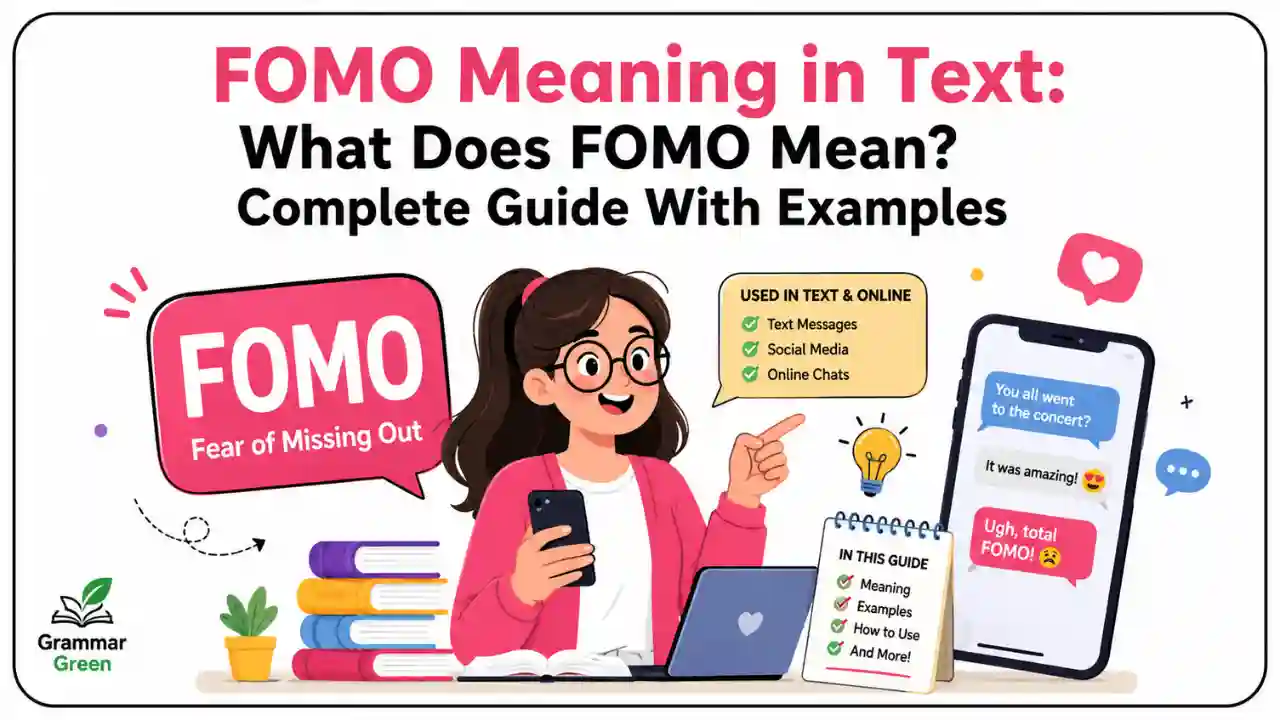
Have you ever seen someone comment “FOMO!” on a social media post or text you saying they have FOMO because they missed a fun event? If so, you may have wondered, what does FOMO mean in text, and why do people use it so often. FOMO is one of the most common internet slang terms used in text messages, social media, and everyday conversations. Whether you’re chatting on WhatsApp, scrolling through Instagram, watching videos on TikTok, or reading posts on X (formerly Twitter), you’ll likely come across this popular text abbreviation.
In this guide, you’ll learn the FOMO meaning, what FOMO stands for, and how to use FOMO correctly in different situations. We’ll also explain FOMO meaning in texting, share real-life FOMO examples, compare it with similar slang like JOMO, and answer common questions people ask online. By the end, you’ll understand Fear of Missing Out and feel confident using this widely recognized internet acronym in your own conversations.
Quick Answer
FOMO stands for Fear of Missing Out. It describes the feeling that other people are enjoying exciting experiences while you are not there. In text messages, social media, and online conversations, people use FOMO to express that they wish they could join an event or activity. It is a popular internet slang term and text abbreviation used on platforms like Instagram, Snapchat, TikTok, Facebook, and WhatsApp.
TL;DR
📌 FOMO means Fear of Missing Out.
📱 It is commonly used in texting, social media, and online chats.
💬 People say FOMO when they feel left out of something fun or exciting.
✅ Example: “You all went to the concert without me? Total FOMO!”
🌍 It is one of the most common internet acronyms used in modern digital communication.
You Might Also Like That: Top Alternatives to This Quote
What Does FOMO Mean?
FOMO is short for Fear of Missing Out. It describes the feeling that you are missing an exciting event, opportunity, or experience while others are enjoying it. This slang expression is widely used in both online and offline conversations.
People often experience FOMO after seeing vacation photos, party videos, or exciting updates on social media. The word is popular because many people can relate to the feeling of wanting to be included. Today, FOMO meaning is understood by millions of internet users around the world.
What Does FOMO Mean in Text?
In text messaging, FOMO has the same meaning—Fear of Missing Out. It is a quick way to tell someone that you wish you could be part of an activity or event.
📱 Examples
- “You all went to dinner? I have serious FOMO.”
- “Watching your vacation stories gives me FOMO!”
- “Everyone is talking about that new movie, and now I have FOMO.”
Using this text abbreviation saves time while clearly expressing your feelings during a conversation.
What Does FOMO Stand For?
The letters F-O-M-O stand for Fear of Missing Out.
| Letter | Meaning |
| F | Fear |
| O | Of |
| M | Missing |
| O | Out |
Today, this internet acronym is recognized worldwide. Although it began as a psychological term, it quickly became popular in internet culture, social media slang, and texting language because it perfectly describes a common feeling.
How Is FOMO Used in Text Messages?
People usually use FOMO when they cannot attend an event or when they see friends having fun without them. It adds emotion to a conversation without needing a long explanation.
💬 Common Examples
- “I’m getting FOMO seeing everyone’s beach pictures.”
- “I wish I could come too! FOMO.”
- “Don’t post more food photos. My FOMO is getting worse!”
This chat abbreviation sounds natural and is commonly used among friends in casual conversations.
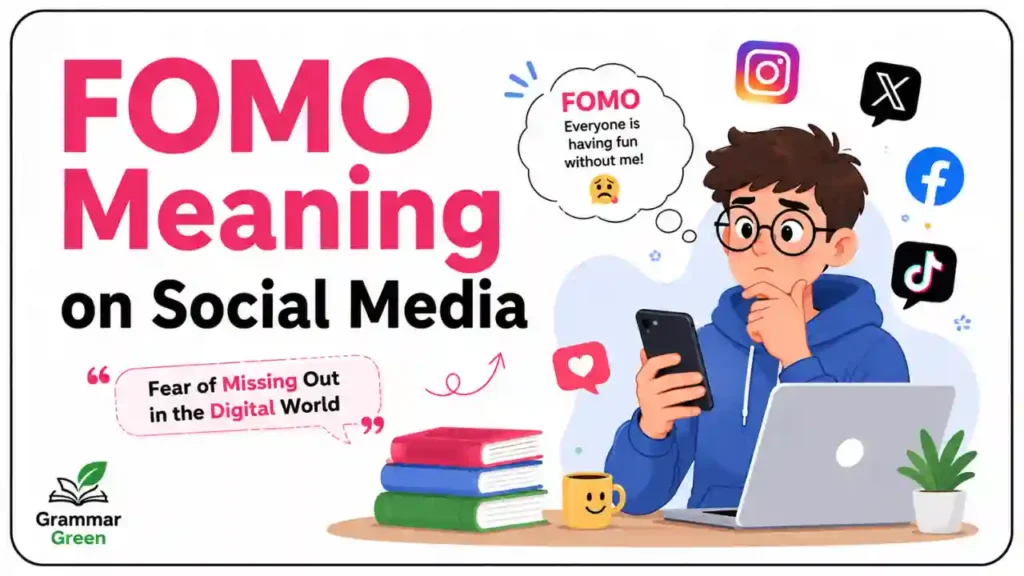
FOMO Meaning on Social Media
Different social media platforms use FOMO in similar ways.
| 📱 Platform | How People Use FOMO |
| Missing vacations or parties | |
| Snapchat | Friends hanging out |
| TikTok | Viral trends and challenges |
| Family gatherings and events | |
| X (Twitter) | Live events and trending topics |
Whether someone is watching travel reels or concert clips, they may comment, “I’m feeling FOMO!” because they wish they were there.
You Might Also Like That: TBH Meaning
Examples of FOMO in Conversations
Seeing real examples makes FOMO meaning in text much easier to understand.
😊 Example 1
Alex: We’re going hiking tomorrow.
Sam: I have work. I’m already feeling FOMO.
🎉 Example 2
Emma: Did you see everyone’s concert videos?
Liam: Yes! Massive FOMO.
🍕 Example 3
Friend: We ordered pizza without you.
You: That’s pure FOMO!
These examples show how naturally this online slang fits into everyday conversations.
When Should You Use FOMO?
Use FOMO whenever you want to express that you feel left out of something enjoyable. It works well in casual conversations with friends and family.
✅ Good situations include:
- Missing a party
- Missing a vacation
- Missing a concert
- Missing a sports event
- Missing a family gathering
- Seeing exciting social media posts
It is best used in friendly conversations rather than formal emails or professional communication.
When Should You Avoid Using FOMO?
Although FOMO is very common, it is not suitable in every situation. Avoid using it in business meetings, official reports, academic writing, or formal emails because some readers may not understand the slang.
Also, avoid using FOMO during serious discussions where a more respectful tone is needed. In those cases, saying “I wish I could have been there” or “I feel disappointed that I missed it” sounds more appropriate.
Is FOMO Positive or Negative?
FOMO can be both positive and negative depending on the situation. Sometimes it simply shows excitement about wanting to join friends. Other times, it reflects stress or anxiety about missing important experiences.
Many people feel Fear of Missing Out after spending too much time on social media, where they constantly see others sharing exciting moments. Keeping a healthy balance between online and offline life can help reduce these feelings.
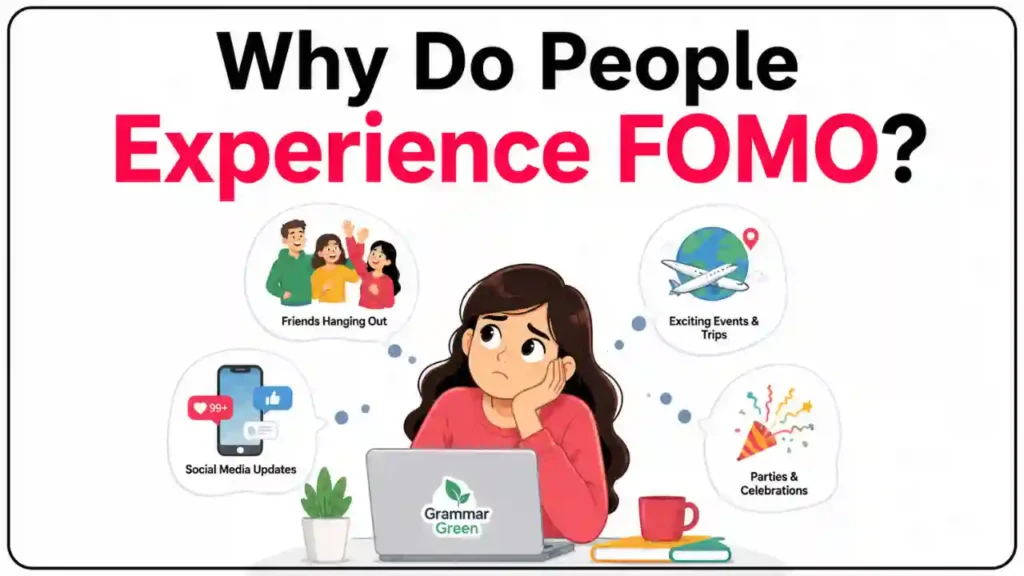
Why Do People Experience FOMO?
People experience FOMO because humans naturally want to feel included. Seeing others enjoy activities can create the feeling that we are missing valuable experiences.
You Might Also Like That: HMU Meaning in Text
Social media has made this feeling even stronger. Photos, videos, and live updates make it seem like everyone else is always having fun. Remember that social media usually shows only the highlights of people’s lives, not the complete picture.
The Origin and History of FOMO
The phrase Fear of Missing Out existed before social media became popular, but the short form FOMO became widely known in the early 2000s. As smartphones and social networking grew, the word spread quickly across the internet.
Today, FOMO is recognized around the world. It appears in news articles, blogs, online discussions, and even dictionaries, making it one of the best-known modern slang terms.
FOMO vs JOMO: What’s the Difference?
Both terms are popular, but they have opposite meanings.
| 🆚 Term | Meaning |
| FOMO | Fear of Missing Out |
| JOMO | Joy of Missing Out |
With FOMO, you feel worried about missing an event. With JOMO, you feel happy staying home and enjoying your own time. Both words are common in internet language, but they express very different emotions.
Common Situations Where People Say FOMO
People use FOMO in many everyday situations.
📍 Friends go on vacation without you.
📍 You miss a birthday party.
📍 You cannot attend a concert.
📍 A trending event happens online.
📍 Everyone watches a new TV series except you.
📍 Your coworkers go out for lunch together.
These situations explain why FOMO remains one of the most popular social media slang terms today.
Similar Slang Words to FOMO
If you understand FOMO, you may also come across these common internet expressions.
| 💡 Slang | Meaning |
| YOLO | You Only Live Once |
| IMO | In My Opinion |
| SMH | Shaking My Head |
| POV | Point of View |
| IYKYK | If You Know, You Know |
Learning these internet acronyms helps you understand modern online conversations more easily.
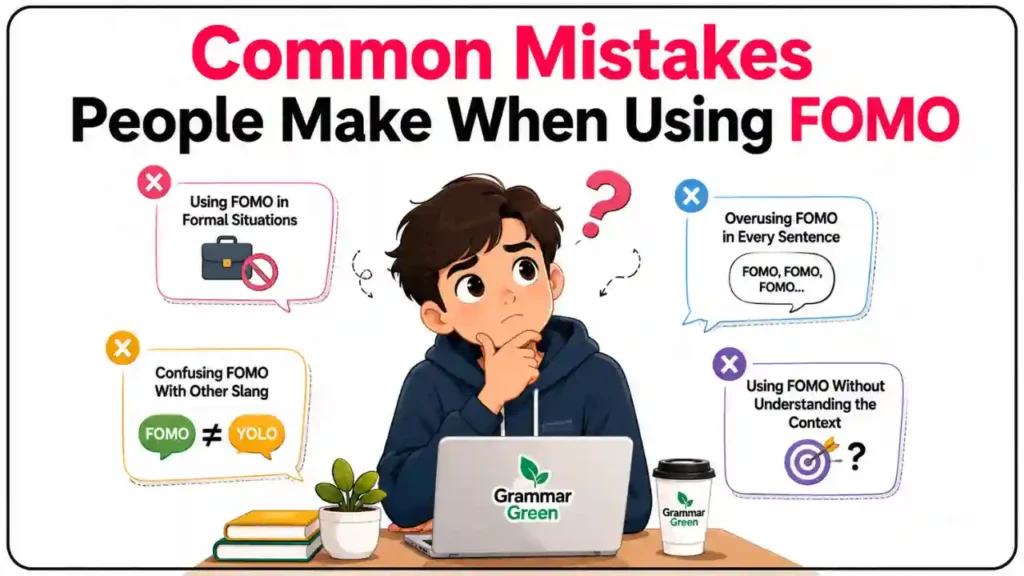
Common Mistakes People Make When Using FOMO
Many people think FOMO only refers to social media, but it can describe any situation where someone feels left out. Another common mistake is using it in professional communication, where it may sound too casual.
Some people also confuse FOMO with YOLO, even though they have different meanings. FOMO is about missing experiences, while YOLO encourages taking opportunities because life is short.
You Might Also Like That: PFP Meaning in Text
Frequently Asked Questions
❓What does FOMO mean in texting?
It means Fear of Missing Out and shows that someone wishes they could join an event or activity.
❓Is FOMO a real word?
Yes. It is a recognized acronym listed in major dictionaries and widely used in modern English.
❓Is FOMO only used online?
No. People use FOMO in text messages, social media, and face-to-face conversations.
❓What is the opposite of FOMO?
The opposite is JOMO, which stands for Joy of Missing Out.
Conclusion
FOMO is much more than just another internet slang word. It represents the common feeling of wishing you were part of an exciting experience that others are enjoying. Whether you see it in text messages, Instagram comments, TikTok videos, or everyday conversations, understanding FOMO meaning in text helps you communicate more naturally in today’s digital world.
Now that you know what FOMO means, what FOMO stands for, and how to use it correctly, you’ll be able to recognize this popular text abbreviation with confidence. Just remember to use it in casual conversations, understand the context, and enjoy staying connected without letting the Fear of Missing Out control your happiness.