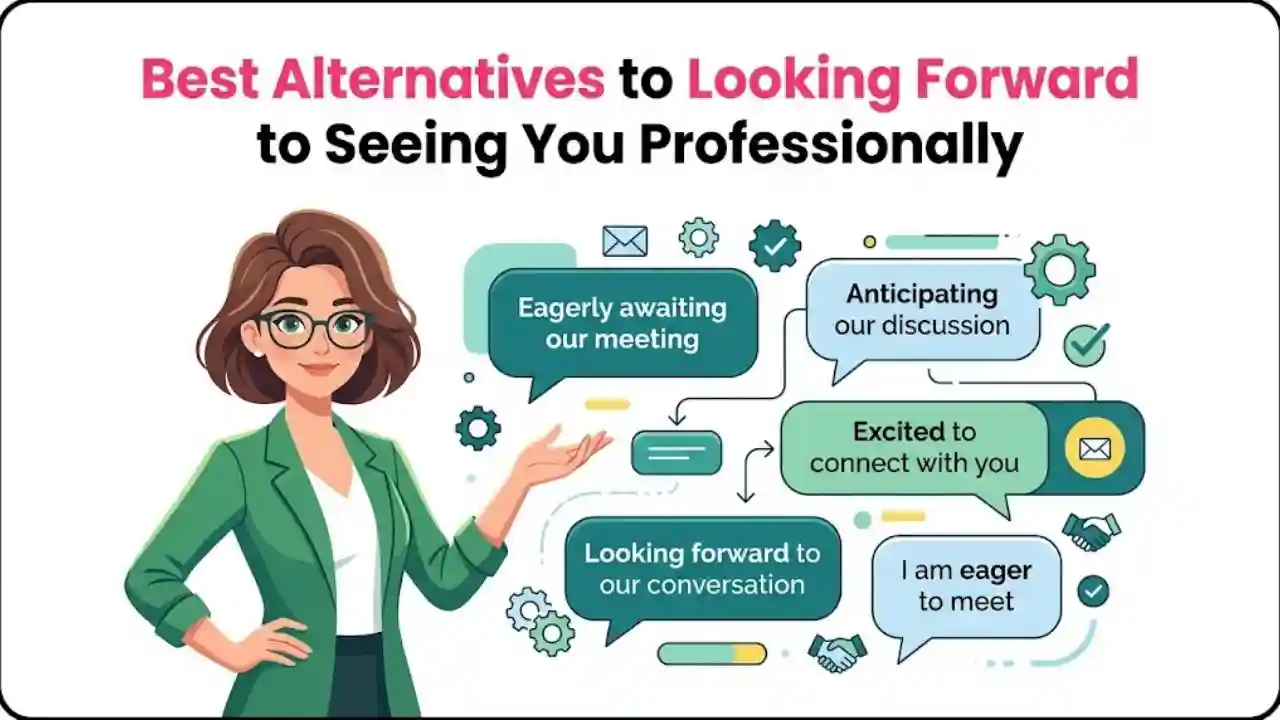
Finding the right words for professional communication can make your emails and conversations sound more polished. While “looking forward to seeing you” is friendly and professional in many situations, you may want a more formal, specific, or natural expression depending on who you are addressing. Knowing the right professional alternatives to looking forward to seeing you can help you communicate with confidence.
Whether you are writing a business email, confirming a meeting, speaking with a client, preparing for an interview, or connecting with a new professional contact, this guide explains other ways to say looking forward to seeing you professionally. You will find formal phrases, friendly professional alternatives, practical examples, and tips for choosing the right expression.
Quick Answer:
Some of the best professional ways to say looking forward to seeing you include “I look forward to our meeting,” “I look forward to speaking with you,” “I look forward to meeting you,” and “I look forward to our conversation.”
You can also say “I look forward to connecting with you” when networking or “I look forward to seeing you again” when you already know the person. The best choice depends on your relationship and situation. For a formal business email, “I look forward to our meeting” works well. For an interview, “I look forward to speaking with you” sounds natural and professional.
TL;DR
There are many professional alternatives to “looking forward to seeing you,” and the best choice depends on the situation. Use “I look forward to our meeting” for formal business communication, “I look forward to meeting you” for a first meeting, and “I look forward to speaking with you” for interviews or discussions. For networking, “I look forward to connecting with you” sounds warm and professional. If you already know the person, “I look forward to seeing you again” works naturally. The key is to choose a phrase that matches your relationship, purpose, and level of formality.
You Might Also Like That: FR Meaning Explained
Is “Looking Forward to Seeing You” Professional?
Yes, “looking forward to seeing you” is professional when you use it in the right situation. The phrase shows positive anticipation and works well in professional emails, meetings, workplace communication, and business relationships. However, the tone can change depending on the person and context. If you already know the recipient, “I look forward to seeing you again” sounds warm and natural. If you will meet someone for the first time, “I look forward to meeting you” may fit better. For highly formal communication, “I look forward to our meeting” or “I look forward to speaking with you” can create a more polished impression.
What Does “Looking Forward to Seeing You” Mean?
The phrase “looking forward to seeing you” means that you feel positive about seeing someone in the future. It expresses anticipation, enthusiasm, and polite interest in an upcoming interaction. In professional communication, the phrase can refer to a meeting, appointment, conversation, or another planned event. The expression can sound formal or friendly depending on the surrounding message. For example, “I look forward to seeing you at the conference” sounds professional, while “I can’t wait to see you” sounds more casual. Understanding this difference helps you choose the right professional wording for emails, business conversations, meetings, and workplace situations.
Best Professional Alternatives to “Looking Forward to Seeing You”
Here are some useful alternatives to looking forward to seeing you that work well in professional communication:
| Alternative | Best Use |
| I look forward to our meeting. | Formal business meetings |
| I look forward to speaking with you. | Interviews and discussions |
| I look forward to meeting you. | First meetings |
| I look forward to our conversation. | Business discussions |
| I look forward to connecting with you. | Networking |
| I look forward to seeing you again. | Existing contacts |
| I’m looking forward to our discussion. | Professional conversations |
| I’m excited to connect with you. | Warm professional communication |
These expressions offer a natural way to avoid repeating the same phrase. Choose one based on your professional tone, relationship, and purpose.
Formal Alternatives to “Looking Forward to Seeing You”
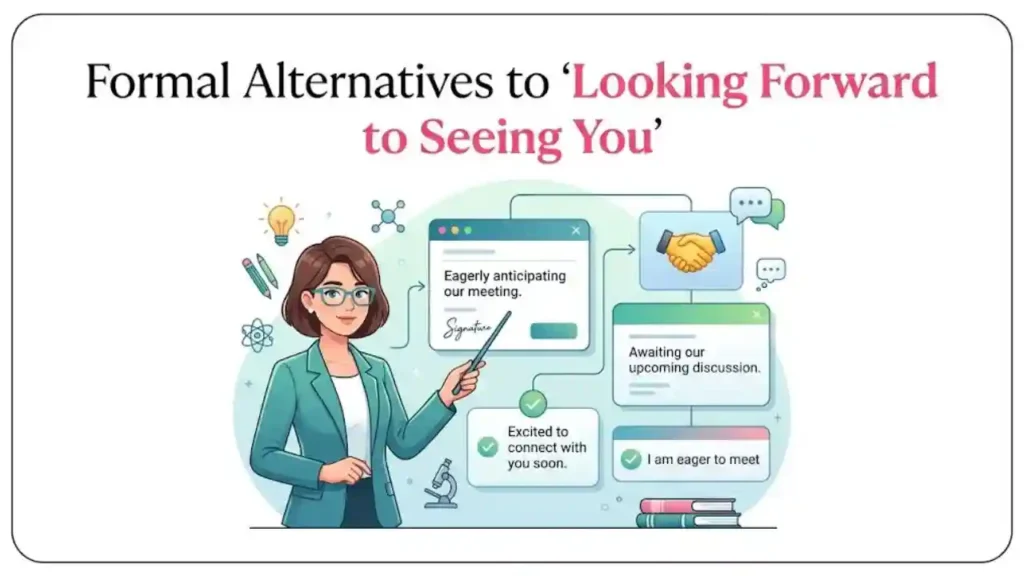
When you need a formal way to say looking forward to seeing you, choose wording that sounds respectful and direct. “I look forward to our meeting” works especially well for business correspondence, formal appointments, and executive communication. “I look forward to speaking with you” also creates a polished tone for interviews, consultations, and important discussions. You can use “It will be a pleasure to meet with you” when you want to sound particularly courteous. These formal alternatives to looking forward to seeing you work well in professional emails because they express interest without sounding overly casual or emotional.
Professional but Friendly Alternatives
You do not always need extremely formal language to sound professional. A professional but friendly expression can help you build a stronger relationship with a colleague, client, or business contact. Try phrases such as “I look forward to connecting with you,” “I’m looking forward to our conversation,” or “I look forward to seeing you again.” These expressions create a warm professional tone while keeping the message appropriate for work. If you want to sound approachable without becoming too casual, avoid phrases such as “Can’t wait to see you!” in formal situations. Instead, choose friendly professional wording that shows genuine enthusiasm.
Professional Alternatives for Emails
Many people search for other ways to say looking forward to seeing you in an email because the closing sentence can affect the overall tone. For a formal business email, write “I look forward to our meeting next Tuesday.” For an interview, use “I look forward to speaking with you about the position.” For a client, try “I look forward to discussing the project with you.” These professional email phrases sound more natural when you connect them to a specific purpose. A specific sentence often works better than a generic email closing because it tells the reader exactly what you anticipate discussing or doing.
You Might Also Like That: FR Meaning Explained
Professional Alternatives for Business Meetings
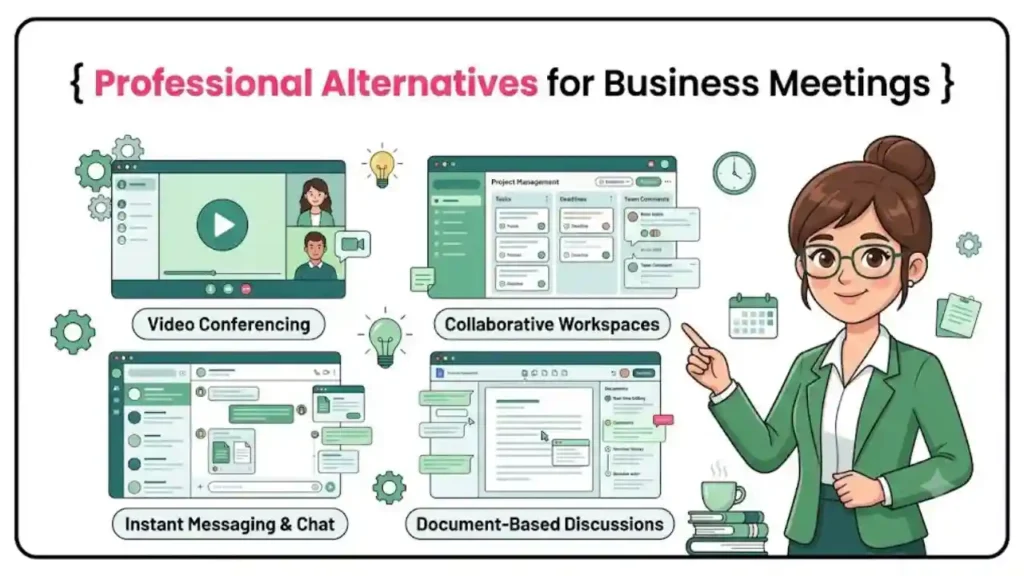
Before a business meeting, choose a phrase that matches the purpose of the meeting. “I look forward to our meeting” works well when you have already scheduled a formal appointment. You can make the message more specific by writing, “I look forward to discussing the new proposal with you.” For a virtual meeting, you might say, “I look forward to our conversation tomorrow.” These professional meeting phrases work well in meeting confirmations, business emails, and follow-up messages. They also help you sound prepared and confident. When possible, connect your closing sentence to the meeting topic instead of using a generic expression.
Professional Alternatives for Clients and Customers
When communicating with clients or customers, your wording should sound respectful, confident, and warm. “I look forward to our meeting” works well for a scheduled client appointment, while “I look forward to discussing this with you” works well for a business discussion. You can also write “I look forward to continuing our conversation” when you already have an established relationship. These phrases support strong client communication without sounding overly familiar. Avoid highly casual expressions unless you have a close relationship with the client. A professional email should communicate enthusiasm while keeping the focus on the client’s needs, meeting, project, or upcoming discussion.
Professional Alternatives for Job Interviews
Job interviews require careful professional communication because your wording can influence the impression you create. If you have received an interview invitation, “I look forward to speaking with you” is one of the safest choices. You can also write, “I look forward to discussing the position with you.” If you will meet the interviewer in person for the first time, “I look forward to meeting you” works naturally. These professional interview phrases show enthusiasm without sounding too casual. They also work well in interview confirmation emails, recruiter communication, and follow-up messages. Keep your tone confident, respectful, and focused on the opportunity.
Professional Alternatives for Networking
Networking often requires a friendly professional tone rather than extremely formal language. When you meet a new business contact, “I look forward to connecting with you” can sound more natural than “looking forward to seeing you.” You can also say, “I’m excited to connect with you at the conference” or “I look forward to continuing our conversation.” These phrases work well in networking emails, event messages, and professional introductions. If you have already spoken with someone, “I look forward to seeing you again” may sound more appropriate. The goal is to show genuine interest while maintaining a professional and approachable tone.
What to Say When You Have Already Met the Person
When you already know someone, “I look forward to seeing you again” often sounds more natural than “I look forward to meeting you.” You can also use “I look forward to catching up with you,” “It will be great to see you again,” or “I look forward to reconnecting with you.” Your choice depends on the relationship. “Catching up” sounds friendly professional, while “reconnecting” works well for a former colleague or business contact. These alternatives help you avoid using the wrong phrase for an existing relationship. They also provide natural options when writing professional emails to colleagues, clients, or previous contacts.
What to Say When You Are Meeting Someone for the First Time
When you will meet someone for the first time, “I look forward to meeting you” usually fits better than “I look forward to seeing you.” You can use this phrase with a new client, interviewer, manager, colleague, or networking contact. For a more formal message, write “It will be a pleasure to meet with you.” For a professional email, “I look forward to meeting you and discussing the project” adds useful context. This distinction matters because “meeting” often introduces a new relationship, while “seeing you again” suggests that you already know the person.
Looking Forward to Seeing You vs. Looking Forward to Meeting You
The difference between “seeing you” and “meeting you” mainly depends on your relationship with the other person. Use “I look forward to seeing you again” when you already know the person or have met before. Use “I look forward to meeting you” when you expect to meet someone for the first time. You can use “I look forward to speaking with you” when the main purpose involves a conversation, such as an interview or consultation. For a business appointment, “I look forward to our meeting” sounds neutral and professional. Choosing the right verb makes your message more precise.
Looking Forward to Seeing You vs. “I’m Looking Forward to Seeing You”
Both “I look forward to seeing you” and “I’m looking forward to seeing you” are correct, but they can create slightly different impressions. “I look forward to seeing you” often sounds more formal and works especially well in professional emails and business communication. “I’m looking forward to seeing you” can sound slightly warmer and more conversational. Neither expression is wrong. Your choice depends on the overall tone of your message. If you want a polished professional email closing, “I look forward to seeing you” often provides a simple and confident finish without sounding overly formal.
How to Choose the Right Professional Alternative
Choosing the right phrase becomes easy when you consider who you are addressing and what will happen next. For a formal business meeting, use “I look forward to our meeting.” For a first meeting, choose “I look forward to meeting you.” For an interview or discussion, use “I look forward to speaking with you.” For networking, choose “I look forward to connecting with you.” If you already know the person, use “I look forward to seeing you again.” This simple approach helps you choose professional alternatives based on context instead of selecting a phrase simply because it sounds formal.
Professional Email Examples
Here are practical examples you can adapt for different situations:
Client email: “Thank you for confirming the appointment. I look forward to discussing the project with you on Thursday.”
Interview email: “Thank you for the opportunity. I look forward to speaking with you during the interview.”
Networking email: “It was great connecting with you at the event. I look forward to continuing our conversation.”
Meeting confirmation: “Thank you for confirming the time. I look forward to our meeting next Tuesday.”
Existing colleague: “Thank you for arranging the meeting. I look forward to seeing you again.”
These examples show how specific wording can make a professional email sound more natural.
You Might Also Like That: FR Meaning Explained
Common Mistakes to Avoid
Avoid choosing a professional phrase simply because it sounds formal. Context matters more than complicated vocabulary. Do not use “I look forward to meeting you” if you have already met the person and want to express that you will see them again. Avoid overly casual phrases such as “Can’t wait to see you!” in formal business emails unless your relationship supports that tone. You should also avoid repeating the same generic sentence in every email. Instead, connect your wording to the meeting, conversation, project, or event. This approach creates more natural professional communication and shows that you wrote the message thoughtfully.
Is “I Look Forward to Seeing You” Grammatically Correct?
Yes, “I look forward to seeing you” is grammatically correct. A common mistake is writing “I look forward to see you,” but that construction is incorrect. The expression “look forward to” uses “to” as a preposition, so it should be followed by a noun or an -ing verb form. Therefore, write “I look forward to seeing you,” “I look forward to meeting you,” or “I look forward to speaking with you.” Remembering this simple grammar rule can help you avoid errors in professional emails, business communication, interviews, and workplace messages.
How to Sound Warm Without Being Too Casual
Good professional communication balances respect, warmth, and confidence. A phrase can sound too casual if it uses strong emotional language, while overly formal wording can make your message feel cold. Instead of “I can’t wait to see you,” try “I’m looking forward to our conversation.” Instead of “I eagerly anticipate our forthcoming interaction,” simply write “I look forward to our meeting.” These examples show how simple language often sounds more natural. When you want to express enthusiasm professionally, choose words that feel genuine but still match the relationship and purpose of the communication.
How to Avoid Sounding Generic in Professional Emails
A simple way to improve a professional email is to make your closing specific. Instead of writing, “I look forward to seeing you,” connect the sentence to the purpose of your interaction. For example, write “I look forward to seeing you and discussing the project next Thursday.” You could also say, “I look forward to speaking with you about the new proposal.” Specific wording sounds more thoughtful and useful than a generic closing. It also helps your email feel more human. When you mention the meeting, topic, or expected discussion, you show the recipient that you understand the purpose of the communication.
Professional Alternatives by Tone
Different situations require different levels of formality. For very formal communication, use “It will be a pleasure to meet with you.” For a formal professional email, choose “I look forward to our meeting.” For a warm professional message, try “I look forward to connecting with you.” For a friendly professional relationship, “I look forward to seeing you again” can work well. Casual phrases such as “Can’t wait to see you” may suit close colleagues but can feel inappropriate in formal business communication. Matching your wording to the situation helps you communicate naturally and confidently.
| Professional Alternative | Best Use |
| I look forward to our meeting. | Formal business meetings |
| I look forward to speaking with you. | Interviews and discussions |
| I look forward to meeting you. | First meetings |
| I look forward to our conversation. | Business discussions |
| I look forward to connecting with you. | Networking |
| I look forward to seeing you again. | Existing contacts |
| I’m looking forward to our discussion. | Professional conversations |
These professional ways to say looking forward to seeing you keep your message polite, clear, and natural.
Is “Looking Forward to Seeing You” Professional?
Yes, “looking forward to seeing you” is professional when you use it in the right context. It works well in business emails, workplace communication, meetings, and professional relationships. However, the phrase can sound warmer and more personal than some formal alternatives.
For example, “I look forward to our meeting” sounds more formal, while “I look forward to seeing you again” sounds warm and professional. Your relationship with the recipient also matters. Think about the situation before choosing an expression. A client, manager, interviewer, or new business contact may require a more polished phrase.
What Does “Looking Forward to Seeing You” Mean?
The phrase “looking forward to seeing you” means that you feel positive about seeing someone in the future. It shows anticipation, interest, and enthusiasm about an upcoming meeting or interaction.
In professional communication, you might use it before a meeting, appointment, conference, interview, or business event. For example, “I look forward to seeing you at the conference” shows that you expect to meet the person and feel positive about it. The phrase does not sound overly formal, but it can still work in professional settings when the relationship and situation make the wording appropriate.
Best Professional Alternatives to “Looking Forward to Seeing You”
You have many alternatives to looking forward to seeing you, but not every phrase works in every situation. The strongest choices focus on the purpose of the interaction.
1. I Look Forward to Our Meeting
This is one of the safest formal alternatives to looking forward to seeing you. Use it when you have already scheduled a business meeting, appointment, or professional discussion. It sounds clear and confident without adding unnecessary emotion.
Example: “Thank you for confirming the time. I look forward to our meeting on Monday.”
2. I Look Forward to Speaking With You
This phrase works especially well for interviews, consultations, and business discussions. It focuses on the conversation rather than the physical meeting.
Example: “Thank you for the opportunity. I look forward to speaking with you about the position.”
3. I Look Forward to Connecting With You
Use this professional and friendly expression for networking, introductions, conferences, and new business relationships. It sounds warm while maintaining a professional tone.
Example: “I enjoyed our conversation online and look forward to connecting with you at the conference.”
You Might Also Like That: FR Meaning Explained
Formal Alternatives to “Looking Forward to Seeing You”
When you need a formal way to say looking forward to seeing you, choose simple and respectful wording. “I look forward to our meeting” works well in formal business emails, client communication, and scheduled appointments. You can also use “I look forward to speaking with you” for interviews, consultations, and important discussions.
Another option is “It will be a pleasure to meet with you.” This sounds especially polite but remains easy to understand. Avoid using complicated expressions just to sound formal. In professional writing, clear and direct language usually creates a stronger impression than overly complex vocabulary.
Professional but Friendly Alternatives
Not every professional message needs a formal tone. Sometimes you want to sound warm, natural, and approachable while still showing respect.
Try phrases such as “I look forward to seeing you again,” “I look forward to connecting with you,” or “I’m looking forward to our conversation.” These expressions work well with colleagues, clients, business contacts, and professional acquaintances.
A friendly professional tone can help strengthen relationships. However, avoid very casual expressions such as “Can’t wait to see you!” when writing to a senior manager, new client, or formal business contact. Choose wording that matches the relationship.
Professional Alternatives for Emails
Email communication often requires careful wording because the reader cannot hear your tone. A strong professional email should sound polite, specific, and natural.
For a Business Email
Use “I look forward to our meeting” when you have scheduled a formal meeting. You can make the message more useful by adding the topic.
Example: “I look forward to our meeting and discussing the new marketing plan.”
For a Follow-Up Email
Use “I look forward to continuing our conversation” when you have already discussed a topic.
Example: “Thank you for your time today. I look forward to continuing our conversation next week.”
These phrases work well as professional email closing sentences.
Professional Alternatives for Business Meetings
For an upcoming business meeting, choose a phrase that clearly matches the purpose of the meeting. “I look forward to our meeting” is a simple choice for formal communication.
You can also make your wording more specific. Instead of writing, “I look forward to seeing you,” try “I look forward to discussing the project with you.” This approach tells the reader what you expect to discuss.
For virtual meetings, you can write, “I look forward to our conversation tomorrow.” Specific wording makes your professional meeting communication feel more personal and useful.
Professional Alternatives for Clients and Customers
Client communication requires a balance between professionalism and warmth. You want to show interest without sounding too casual.
Use “I look forward to our meeting” for a scheduled client appointment. For a discussion, try “I look forward to discussing this with you.” If you already have a strong business relationship, “I look forward to continuing our conversation” can sound natural.
Avoid phrases that sound too emotional or informal. Your goal should be to create confidence and trust. Clear professional client communication often works better than impressive-sounding language.
Professional Alternatives for Job Interviews
A job interview requires a confident and respectful tone. One of the best phrases is “I look forward to speaking with you.” It works well in interview confirmation emails and communication with recruiters or hiring managers.
If you will meet the interviewer for the first time, “I look forward to meeting you” also works well.
You can make the message more specific by writing, “I look forward to discussing the position with you.” These professional interview phrases show enthusiasm without sounding too casual or overly excited.
Professional Alternatives for Networking
Networking usually needs a warm professional tone. If you are meeting a new business contact, “I look forward to connecting with you” often sounds more natural than “looking forward to seeing you.”
You can also say, “I’m excited to connect with you at the event” or “I look forward to continuing our conversation.”
These phrases work well in networking emails, conference messages, professional introductions, and business communication. When you already know the person, “I look forward to seeing you again” may be a better choice.
You Might Also Like That: FR Meaning Explained
What to Say When You Have Already Met the Person
If you have met the person before, use wording that shows an existing relationship. “I look forward to seeing you again” is a natural professional alternative.
You can also say:
- I look forward to catching up with you.
- It will be great to see you again.
- I look forward to reconnecting with you.
“Catching up” sounds slightly more friendly, while “reconnecting” works well with former colleagues or business contacts. Choosing the right phrase helps you avoid making an existing professional relationship sound like a first introduction.
What to Say When You Are Meeting Someone for the First Time
When you have never met someone before, “I look forward to meeting you” usually sounds more appropriate than “I look forward to seeing you.”
This phrase works well with:
- New clients
- Interviewers
- Recruiters
- New colleagues
- Business partners
- Networking contacts
For a more formal message, you can write, “It will be a pleasure to meet with you.” You can also add the purpose of the meeting: “I look forward to meeting you and discussing the project.” This makes your professional email more specific.
Looking Forward to Seeing You vs. Looking Forward to Meeting You
The main difference between seeing and meeting relates to whether you already know the person.
| Phrase | Best Situation |
| Seeing you again | You already know the person |
| Meeting you | First meeting |
| Speaking with you | Interview or discussion |
| Connecting with you | Networking |
| Our meeting | Formal business meeting |
| Our conversation | Discussion-focused situation |
Use “seeing you again” when you already have a relationship. Use “meeting you” when you expect a first encounter. This small difference can make your professional communication sound much more natural.
Looking Forward to Seeing You vs. “I’m Looking Forward to Seeing You”
Both forms are correct, but they can create a slightly different tone. “I look forward to seeing you” often sounds more formal and works well in business emails. “I’m looking forward to seeing you” sounds a little warmer and more conversational.
For example:
Formal: “Thank you for confirming the appointment. I look forward to seeing you on Friday.”
Warmer: “Thank you for confirming. I’m looking forward to seeing you on Friday.”
Both expressions work in professional communication. Choose the one that best matches the overall tone of your message.
How to Choose the Right Professional Alternative
Choosing the right phrase becomes easier when you consider the person, purpose, and level of formality.
| Situation | Recommended Phrase |
| First meeting | I look forward to meeting you. |
| Existing contact | I look forward to seeing you again. |
| Interview | I look forward to speaking with you. |
| Networking | I look forward to connecting with you. |
| Formal meeting | I look forward to our meeting. |
| Business discussion | I look forward to our conversation. |
This simple guide can help you choose the best professional alternative without overthinking your wording.
Professional Email Examples
Here are a few ready-to-use examples for common situations:
📧 Client email: “Thank you for confirming the appointment. I look forward to discussing the project with you on Thursday.”
💼 Interview email: “Thank you for the opportunity. I look forward to speaking with you during the interview.”
🤝 Networking email: “It was great connecting with you. I look forward to continuing our conversation.”
📅 Meeting confirmation: “Thank you for confirming the time. I look forward to our meeting next Tuesday.”
👥 Existing colleague: “Thank you for arranging the meeting. I look forward to seeing you again.”
These examples show how simple wording can make a professional email sound natural.
Common Mistakes to Avoid
Avoid using the same phrase in every professional message. While “I look forward to seeing you” works well, repeating it can make your emails sound generic.
Also, do not use “I look forward to meeting you” when you already know the person. Avoid very casual expressions such as “Can’t wait to see you!” in formal client or business emails.
Another common mistake involves grammar. Do not write “I look forward to see you.” The correct form is “I look forward to seeing you.” Finally, avoid complicated words simply to sound professional. Clear language usually creates a better impression.
Is “I Look Forward to Seeing You” Grammatically Correct?
Yes, “I look forward to seeing you” is grammatically correct. The common mistake is using the base verb after “to.”
❌ I look forward to see you.
✅ I look forward to seeing you.
The reason is simple: in “look forward to,” the word “to” acts as a preposition. A preposition can be followed by a noun or an -ing form.
The same rule applies to other phrases:
- I look forward to meeting you.
- I look forward to speaking with you.
- I look forward to connecting with you.
How to Sound Warm Without Being Too Casual
Professional writing does not need to sound cold. You can show enthusiasm while keeping your language respectful.
Instead of “Can’t wait to see you!”, try “I’m looking forward to our conversation.” Instead of using overly formal wording, simply write “I look forward to our meeting.”
The best professional communication often sits between formal and casual. Use simple, warm, and confident language that matches your relationship with the reader. If you communicate with a client or manager, stay more formal. With a close colleague, you can use a slightly warmer expression.
How to Avoid Sounding Generic in Professional Emails
A specific sentence often sounds better than a generic professional email closing. Instead of writing, “I look forward to seeing you,” mention the reason for the meeting.
For example:
I look forward to seeing you and discussing the new proposal next Thursday.
You could also write:
I look forward to speaking with you about the project.
Specific wording makes your email feel more thoughtful and personal. It also helps the reader understand what you expect from the upcoming interaction. This simple technique can make your professional email communication sound more natural without adding unnecessary words.
Professional Alternatives by Tone
Your choice should match the tone you want to create.
| Tone | Example |
| Very Formal | It will be a pleasure to meet with you. |
| Formal | I look forward to our meeting. |
| Professional | I look forward to speaking with you. |
| Warm Professional | I look forward to connecting with you. |
| Friendly Professional | I look forward to seeing you again. |
| Casual | Can’t wait to see you! |
For most business emails, the formal, professional, or warm professional options work best. Save casual phrases for relationships where you already have a relaxed communication style.
You Might Also Like That: FR Meaning Explained
Frequently Asked Questions
What is a professional way to say “looking forward to seeing you”?
You can say “I look forward to our meeting,” “I look forward to speaking with you,” or “I look forward to connecting with you.” Choose the phrase based on your situation.
Is “looking forward to seeing you” professional?
Yes. It works well when you already know the person or expect to see them in a professional setting. For more formal situations, use “I look forward to our meeting.”
What is a formal alternative?
“I look forward to our meeting” is one of the clearest formal alternatives. You can also use “It will be a pleasure to meet with you.”
How do I use it in a professional email?
Connect the phrase to the purpose of the interaction. For example, write “I look forward to discussing the project with you.”
What is the difference between seeing and meeting?
“Meeting” usually works for a first encounter, while “seeing you again” works better when you already know the person.
Is “I look forward to meeting you” professional?
Yes. It works particularly well for interviews, new clients, business introductions, and professional appointments.
Is “I’m looking forward to seeing you” grammatically correct?
Yes. The -ing form “seeing” correctly follows “look forward to.”
How can I sound warm but professional?
Use phrases such as “I look forward to connecting with you” or “I look forward to our conversation.” They show interest without sounding too casual.
What can I say instead of “Can’t wait to see you” professionally?
Try “I look forward to seeing you,” “I look forward to our meeting,” or “I’m looking forward to our conversation.”
What is a professional way to say “excited to see you”?
You can say “I’m looking forward to seeing you” or “I’m excited to connect with you.” The second option works particularly well for networking and friendly professional communication.
Final Thoughts
There are many other useful ways to say looking forward to seeing you professionally, but the best choice depends on the situation. Use “I look forward to meeting you” for a first meeting, “I look forward to seeing you again” for an existing relationship, and “I look forward to speaking with you” for interviews or discussions. For formal business communication, “I look forward to our meeting” remains a safe and polished choice.
The key is to keep your wording clear, natural, and specific. Instead of choosing the most complicated phrase, choose the one that fits your relationship, purpose, and professional tone.