The phrase “I look forward to working with you” is widely used in professional email communication, business correspondence, and workplace messages. It expresses positivity, cooperation, and readiness to collaborate on a task, project, or new role. People commonly use it in client emails, job acceptance messages, and team introductions.
However, because it is so common, it can sound a bit repetitive and predictable in modern communication. This is why many people search for other ways to say I look forward to working with you or professional alternatives. Using varied expressions helps your writing sound more natural, confident, and engaging while still staying polite and professional.
QUICK Answer
Instead of saying “I look forward to working with you,” you can use simple alternatives like I’m excited to collaborate with you, looking forward to working together, or happy to be working with you.
You can also say I’m eager to contribute to the team, excited to get started with you, or looking forward to a successful collaboration. These phrases keep your tone professional, clear, and natural, while avoiding repetition in emails and business communication.
Why You Should Avoid Repeating the Same Phrase in Emails
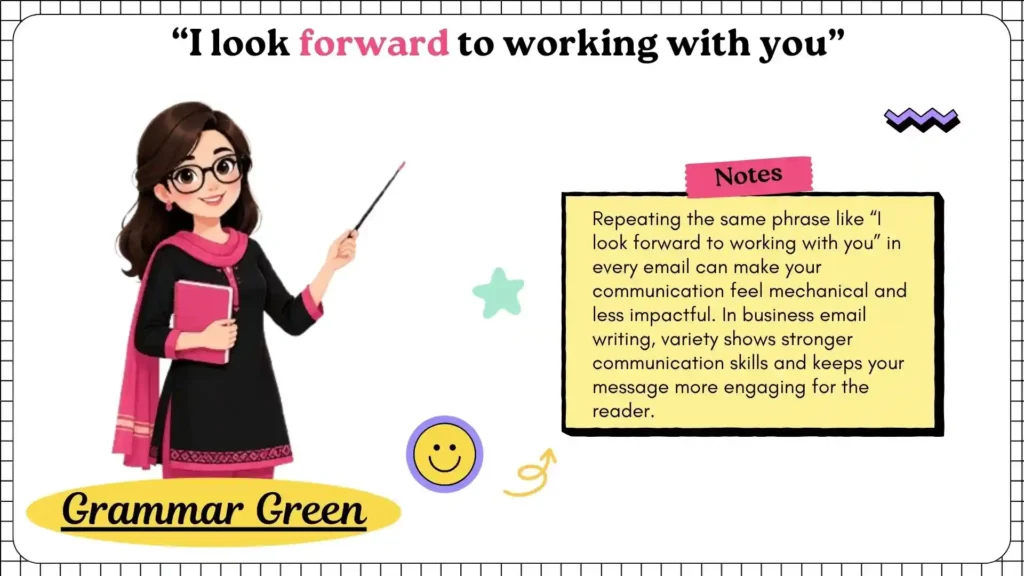
Repeating the same phrase like “I look forward to working with you” in every email can make your communication feel mechanical and less impactful. In business email writing, variety shows stronger communication skills and keeps your message more engaging for the reader.
Using different professional email phrases and polite expressions helps you match tone to context. For example, client emails may need more formality, while team emails can be more relaxed. This flexibility improves clarity and strengthens your overall professional communication style, making your writing more effective and modern.
Best Professional Ways to Say “I Look Forward to Working With You”
In professional settings, you should use clear and polished alternatives that still express enthusiasm and respect. These phrases work well in business communication, workplace emails, and client interactions.
Some effective options include “I am excited to collaborate with you”, “I look forward to our cooperation”, and “I am pleased to be working with you”. These professional email alternatives sound natural while maintaining a formal tone. They are widely used in corporate environments and help you create a strong and positive impression.
Formal Alternatives for Business Communication
In formal business emails, your tone should remain structured, respectful, and professional. Instead of using a common phrase repeatedly, you can choose more refined formal email expressions that reflect professionalism.
Examples include “I look forward to a successful partnership”, “I anticipate our future collaboration”, and “It will be a pleasure working with you”. These are commonly used in business correspondence phrases and are suitable for proposals, corporate communication, and official messages where tone and credibility matter.
Friendly and Warm Alternatives for Workplace Emails
In daily workplace communication, a friendly tone often works better than a strict formal one. Using friendly email phrases helps you sound approachable while still remaining professional.
You can say “Happy to work with you on this”, “Looking forward to teaming up”, or “Great to be working together”. These workplace collaboration phrases are simple, natural, and effective. They help build stronger team relationships and make internal professional email communication feel more human and engaging.
Confident and Enthusiastic Alternatives
When you want to show energy and motivation, use enthusiastic email expressions that create a strong positive impression. These are ideal for new projects, job starts, or important partnerships.
Phrases like “I’m excited to get started with you”, “I truly look forward to our success together”, and “I can’t wait to begin working together” work very well. These sales and business communication phrases add confidence and enthusiasm while still staying professional and respectful.
Alternatives for Client Emails and Business Deals
In client communication, trust and clarity are very important. Instead of a basic phrase, use expressions that show commitment and reliability in your message.
You can use “I look forward to a strong working relationship”, “Excited about our upcoming project together”, or “Looking forward to a successful partnership ahead”. These client onboarding email phrases help build trust and set a positive tone for long-term collaboration in business development communication.
Alternatives for Job Interviews and New Roles
For job interviews, onboarding, or new roles, your message should show enthusiasm and readiness. Using strong job-related email phrases helps create a positive impression.
You can say “I’m excited to join the team”, “Looking forward to contributing to the company”, or “I’m eager to start this new role”. These professional email alternatives reflect motivation and confidence, making them perfect for workplace onboarding communication and first-day introductions.
Modern and Natural-Sounding Alternatives
Modern communication prefers simple and natural-sounding email language instead of overly formal expressions. This helps your writing feel more human and easy to read.
Examples include “Looking forward to working together on this”, “Excited to collaborate with you on this project”, and “Glad to be working with you”. These modern email closing phrases are widely used in today’s business communication style, especially in fast-paced digital workplaces.
Industry-Specific Alternatives
Different industries use different professional communication styles depending on context. In marketing, you may say “Excited to launch this campaign together”. In HR, you might use “Looking forward to your onboarding process”.
In sales, phrases like “Ready to grow this partnership” work well, while in tech, you can say “Looking forward to integrating our systems”. These industry-specific email phrases improve relevance and show deeper understanding of business correspondence and collaboration in your field.
Common Mistakes When Using This Phrase in Emails
Many people repeat the same email closing line too often, which makes communication feel dull and repetitive. This reduces engagement and weakens the impact of your message.
Another mistake is using overly formal language in casual workplace emails or too casual tone in professional settings. The key is balance. Using varied professional email expressions ensures your communication stays clear, natural, and appropriate for each situation in business writing.
When NOT to Use “I Look Forward to Working With You”
Although this phrase is common, it is not always necessary. In urgent updates, short confirmations, or technical discussions, it may sound unnecessary or repetitive.
In ongoing projects, avoid repeating it too often. Instead, switch to alternative business email phrases that match the context. This improves clarity and keeps your professional communication more efficient and direct, especially in fast-paced work environments.
Copy-Paste Email Examples Using These Alternatives
📧 Formal Example:
“I look forward to a successful partnership and productive collaboration ahead.”
📧 Friendly Example:
“Great to be working with you—excited to get started!”
📧 Client Example:
“Looking forward to building a strong and successful working relationship.”
📧 Job Role Example:
“I’m excited to join the team and contribute to upcoming projects.”
These copy-paste email templates help you save time while maintaining strong, clear, and professional business communication.
FAQ: Professional Email Closing Phrases
What can I say instead of “I look forward to working with you”?
You can use phrases like “I’m excited to collaborate with you”, “Looking forward to our partnership”, or “Happy to be working together.”
Are formal alternatives better for business emails?
Yes, in business communication, formal phrases are better for clients, managers, and official emails because they sound more professional and respectful.
Can I use friendly phrases in professional emails?
Yes, but only in internal or casual workplace communication where a relaxed tone is appropriate.
How do I avoid sounding repetitive in emails?
Use different professional email alternatives based on context, such as formal, friendly, or enthusiastic versions.
Conclusion
Using “I look forward to working with you” is perfectly fine, but relying on it too often can make your emails feel repetitive and less engaging. By using different professional email phrases and alternatives, you can improve your business communication style and match your tone to each situation.
Whether you choose a formal, friendly, or enthusiastic expression, the key is to stay clear, natural, and context-appropriate. This helps you sound more confident, modern, and professional in every email you write.