
The phrase “not only” is commonly used in English to add emphasis, especially in the structure “not only…but also.” It helps connect ideas and makes sentences more powerful. However, in writing—especially in essays, academic tasks, and professional content—repeating the same phrase can make your text feel less natural. That is why learners often search for other ways to say not only, including synonyms for not only and not only alternatives.
This guide will help you improve your writing by showing formal, informal, and academic alternatives to not only, along with clear examples. You will also learn how to use sentence connectors, transitional phrases, and grammar alternatives to make your English sound smoother, more natural, and more professional in every context.
Quick Answer
You can replace “not only” with many formal, informal, and academic alternatives such as “in addition to,” “as well as,” “furthermore,” “moreover,” and “along with.” These phrases help improve writing style and avoid repetition.
Choosing the right option depends on tone, context, and sentence structure. In this guide, you will learn other ways to say not only, how each alternative works, and when to use them in real sentences for better clarity and natural English writing.
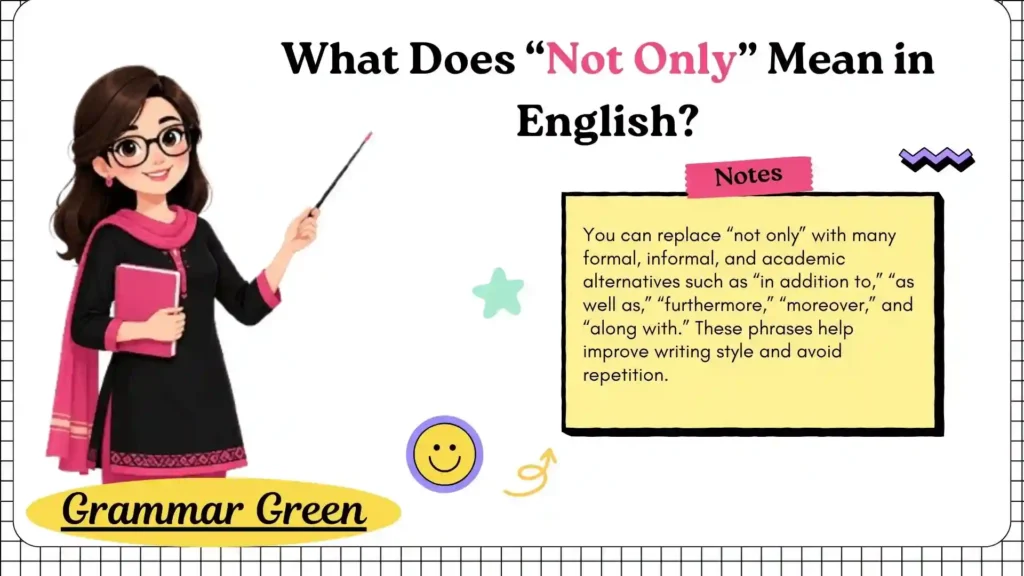
What Does “Not Only” Mean in English?
The phrase “not only” is used to add emphasis and show that something is more important or additional. It usually appears in the structure “not only…but also” to connect two ideas. For example, “She is not only smart but also hardworking.” This structure improves sentence strength and balance. It is commonly used in English writing, essays, and daily communication. Understanding its meaning helps you find better synonyms for not only and improve your overall sentence variety.
How “Not Only” Works in Sentences (Grammar Breakdown)
H3: 🧩 Correlative Structure
The phrase works as a correlative conjunction, meaning it always pairs with another part like “but also.” Both parts must stay balanced in grammar and meaning. For example: “Not only did he finish the task, but he also improved it.”
⚠️ Common Errors
Many learners forget the second part or break structure rules. This causes weak or incorrect sentences. Always keep parallel structure to maintain clarity and correctness in writing.
H2: Other Ways to Say “Not Only” (Core Alternatives List)
There are many simple and natural not only alternatives you can use in writing. These include “in addition to,” “as well as,” “along with,” “besides,” “together with,” and “coupled with.” These phrases help you avoid repetition and make sentences smoother. For example, instead of saying “Not only he is skilled,” you can say “In addition to being skilled, he is experienced.” These are widely used in both formal writing and everyday English communication.
Formal Alternatives for Academic Writing
In academic and professional writing, you should use more polished formal alternatives to not only. Common choices include “moreover,” “furthermore,” “additionally,” and “in addition.” These words help you connect ideas clearly and maintain a professional tone. For example: “Furthermore, the results support the theory.” These alternatives are often used in essays, reports, and research writing. They improve flow and help your writing sound more structured, clear, and academically strong.
H2: Informal & Conversational Alternatives
In everyday English, you can use simpler phrases instead of not only. Examples include “also,” “plus,” “what’s more,” “on top of that,” and “not just.” These expressions are natural in speech and casual writing. For example: “He is smart, and what’s more, he is kind.” These informal alternatives make conversations sound more natural and friendly. They are best used in speaking, social writing, and informal messages where tone is relaxed and easy-going.
Advanced Academic Alternatives
Advanced writers use special academic connectors and discourse markers instead of repeating “not only.” These include additive cohesion devices, emphasis connectors, and sentence amplification phrases. For example, writers may use structured ideas like “from an academic perspective” or “in addition to this argument.” These alternatives improve writing quality in higher-level essays and research papers. They also help create stronger logical flow and show advanced control of English grammar and style.
H2: Not Only vs Other Alternatives (When to Use Each)
Choosing the right phrase depends on context. Use formal alternatives like “moreover” in essays and reports. Use neutral phrases like “also” in general writing. Use informal options like “plus” in speaking or casual text. If you want strong emphasis, use “not just” or “what’s more.” Understanding these differences helps you avoid mistakes and improves clarity. Each option has a different level of strength, so selecting correctly improves your writing quality.
H2: Sentence Examples for Each Alternative
Here are simple transformations to show usage:
- Not only she is talented → In addition to being talented, she is creative.
- He is smart; moreover, he is disciplined.
- She is kind, and what’s more, she is helpful.
These examples show how synonyms for not only change sentence tone. Each version improves fluency and avoids repetition. Using examples helps you understand how to apply each phrase correctly in real writing situations.
H2: Common Mistakes When Replacing “Not Only”
Many learners make mistakes when using not only alternatives. One common error is breaking the sentence balance, especially in correlative structures. Another mistake is using formal connectors in casual speech, which sounds unnatural. Some writers also overuse words like “moreover” or “furthermore.” To avoid these issues, always match the phrase with the correct context. Keeping grammar simple and clear ensures your writing remains natural and easy to understand.
Better Sentence Transformation Techniques
To improve writing, you can use sentence transformation techniques. Start by writing a sentence with “not only,” then rewrite it using alternatives like “in addition to” or “as well as.” This helps you learn flexibility in English. Another method is changing sentence structure to improve flow. For example, shift emphasis from the first idea to the second. These techniques reduce repetition and make your writing more natural and professional.
IELTS & TOEFL Usage Guide
In exams like IELTS and TOEFL, using advanced alternatives not only can improve your writing score. Instead of repeating basic phrases, use connectors like “moreover,” “additionally,” or “in addition.” These words show strong vocabulary control. However, avoid overusing complex phrases. Examiners prefer clarity over complexity. Balanced use of academic writing connectors helps you achieve higher band scores and makes your essays more structured and fluent.
Quick Reference Table of All Alternatives
| Type | Alternatives |
| Formal | moreover, furthermore, additionally |
| Neutral | also, as well as, along with |
| Informal | plus, what’s more, on top of that |
| Emphasis | not just, beyond that, more importantly |
This table gives a quick overview of other ways to say not only based on tone and usage.
Summary: Choosing the Right Alternative
To improve your writing, always choose the right not only synonym based on tone and purpose. Use formal words in academic writing, neutral ones in general content, and informal ones in speech. Avoid repeating the same phrase too often. Learning these English grammar alternatives helps you write more clearly and naturally. With practice, you can easily improve sentence flow and make your writing more professional and engaging.
Frequently Asked Quiestions
What are other ways to say not only in English?
You can use phrases like in addition to, as well as, moreover, furthermore, and also depending on context.
Is “moreover” a good alternative to not only?
Yes, moreover is a strong formal alternative used in academic and professional writing.
Can I use “plus” instead of not only?
Yes, but only in informal speech or casual writing, not in academic work.
What is the best formal alternative?
The best formal options are moreover, furthermore, and additionally.
Conclusion
Understanding other ways to say not only helps you improve both writing and speaking skills. By using the right mix of formal, informal, and academic alternatives, you can avoid repetition and make your sentences more natural. Practicing these phrases regularly will improve your grammar accuracy, writing clarity, and overall fluency in English.