
Finding the right words to express sympathy is not always easy, especially when writing about loss or offering condolences. The phrase “rest in peace” is widely used, but it may feel repetitive or too simple in many situations. That is why many people search for other ways to say rest in peace that sound more personal, respectful, and meaningful.
In this guide, you will discover a wide range of formal, emotional, religious, and casual alternatives to RIP. Each expression is explained with clear meanings and real examples so you can use them confidently in messages, speeches, social media posts, or writing. By the end, you will know exactly how to choose the right words for any situation with care and clarity.
Quick Answer
There are many other ways to say “rest in peace” depending on tone and situation. You can use formal phrases like “may they rest peacefully”, emotional lines like “forever in our hearts”, or religious expressions like “Om Shanti” or “may God grant them eternal rest.”
These alternatives help you avoid repetition and make your message more personal, respectful, and suitable for different contexts like messages, speeches, or social media posts.
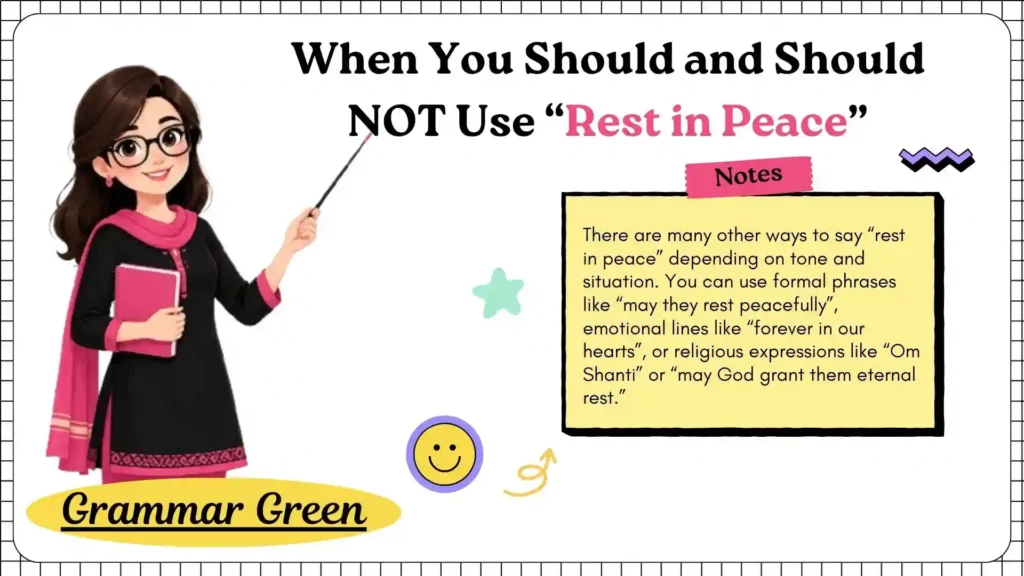
When You Should and Should NOT Use “Rest in Peace”
You should use rest in peace when you want a short and respectful condolence message, especially in obituaries or formal notes. It works well in traditional writing and simple social posts. However, you should avoid overusing it in emotional or professional writing because it can feel limited or impersonal.
In such cases, people often prefer not only RIP but also more meaningful alternatives like “may their soul find peace.” This helps your message feel more thoughtful and appropriate for the situation.
Formal Ways to Say “Rest in Peace”
Formal alternatives are useful in professional writing, speeches, and official messages. You can say “may they rest peacefully”, “in loving memory”, or “may their soul find eternal peace”. These phrases sound more complete and respectful than simple RIP. Writers often use them in essays or reports where tone matters.
These expressions act as not only replacements for RIP but also as improved writing choices that make your message sound polished, respectful, and suitable for serious communication.
Religious and Spiritual Alternatives to “Rest in Peace”
Religious phrases depend on belief systems and carry deep meaning. In Islam, people say “Inna Lillahi wa Inna Ilayhi Raji’un.” In Christianity, phrases like “may God grant eternal rest” are common. In Hindu culture, “Om Shanti” is widely used. These expressions are more powerful because they reflect faith and hope.
They are not just synonyms but not only emotional phrases but also spiritual messages of peace and acceptance, making them suitable for respectful and cultural communication.
Emotional and Sympathetic Alternatives
Emotional alternatives help you express deeper feelings in a natural way. You can say “you will always be remembered”, “gone but never forgotten”, or “your memory lives on”. These phrases are often used in tributes and personal messages.
They feel warmer than RIP and show stronger emotional connection. Many writers prefer these because they are not just formal replacements but also meaningful emotional expressions that help readers feel care, respect, and genuine sympathy in difficult moments.
Casual or Indirect Ways to Express Condolences
Casual phrases are common in daily communication and social media. You can say “so sorry for your loss”, “thinking of you”, or “sending love and strength”. These are simple but still respectful. They work well in chats, comments, and informal messages. Instead of repeating RIP, people often choose these because they feel more human and direct. They act as not only alternatives to formal phrases but also as friendly and supportive expressions in everyday communication.
Euphemistic Alternatives for “Rest in Peace”
Euphemistic phrases make sensitive topics feel softer and more respectful. Examples include “passed away peacefully”, “laid to rest”, or “at peace now”. These expressions avoid direct wording and reduce emotional harshness.
They are often used in writing, news, and storytelling. Writers use them to maintain dignity while describing loss. These phrases are useful because they are not only polite substitutions but also gentle ways to communicate sensitive information without sounding too direct or harsh.
Alternatives Based on Relationship to the Deceased
The best phrase depends on your relationship with the person. For family, you may say “forever in our hearts”. For friends, “you will be deeply missed” works well. For colleagues, “remembered with respect” is more suitable.
This shows that condolence language is not one-size-fits-all. Choosing the right expression helps you sound sincere. These are not only vocabulary changes but also relationship-based communication choices that make your message feel more personal and meaningful.
H2: Situational Usage Examples
Different situations need different expressions. On social media, people often use “gone too soon” or “rest peacefully”. In speeches, you may hear “we honor their memory today”. In condolence letters, formal lines like “I am deeply sorry for your loss” are common. Each situation demands a different tone. These examples show that alternatives are not only grammar variations but also context-based writing tools that help you communicate respectfully across different platforms and audiences.
Common Mistakes When Using “Rest in Peace” Alternatives
One common mistake is using emotional phrases in formal settings where they may feel unprofessional. Another mistake is mixing casual and formal tone in the same message. People also overuse the same phrases repeatedly, which reduces emotional impact. Some expressions may also feel culturally insensitive if used without understanding context. Avoiding these mistakes helps your writing stay clear and respectful. Good writing uses not only correct grammar but also appropriate tone and situation-based language choices.
Better Ways to Write Condolence Messages
You can use simple templates to write better messages. For example: “I am deeply sorry for your loss, and I hope you find strength.” Another example is: “Their memory will always stay with us.” These structures help you express sympathy clearly.
They are useful when you struggle to find words. These templates are helpful because they act as not only sentence guides but also ready-made emotional expressions that improve writing quality and clarity.
Comparison Table of “Rest in Peace” Alternatives
| Type | Example Phrase | Usage |
| Formal | May they rest peacefully | Obituaries, speeches |
| Religious | Om Shanti | Spiritual messages |
| Emotional | Gone but never forgotten | Personal tributes |
| Casual | Thinking of you | Messages, chats |
| Euphemistic | Passed away peacefully | Writing, news |
This table helps you quickly choose the right expression. It shows that alternatives are not only vocabulary choices but also structured communication tools for different situations and tones.
Frequently Asked Questions
What are other ways to say rest in peace?
You can say “may they rest peacefully,” “gone too soon,” or “forever in our hearts.” These depend on tone and situation.
Is “rest in peace” religious?
Yes, it has religious origins but is now widely used in both formal and informal communication.
Can I use RIP in messages?
Yes, but it is better to use more personal alternatives in emotional situations.
What is a respectful alternative to RIP?
Phrases like “may their soul find peace” or “in loving memory” are respectful choices.
Conclusion
There are many other ways to say “rest in peace” depending on context, tone, and relationship. From formal and religious expressions to emotional and casual phrases, each option helps you communicate sympathy in a more meaningful way. Choosing the right words improves clarity and respect in your message. Instead of relying on only one phrase, using varied alternatives makes your writing more natural, human, and thoughtful in every situation.